
The Researcher’s Guide to Consensus AI: Features, Modes, and Plans<span class="wtr-time-wrap after-title"><span class="wtr-time-number">16</span> min read</span>
In this article, I’ll introduce Consensus, an AI-powered tool specifically designed for academic literature search.

“Literature searches take too much time.”
“I’m not even sure which keywords will lead me to the answer I need…”
“I just want to quickly resolve a specific research question!”
If any of this sounds familiar, Consensus may be exactly what you’re looking for.
With three distinct search modes to choose from, Consensus adapts to your research needs—whether you want a quick overview of the literature or a comprehensive search followed by a detailed, structured report.
Remarkably, Consensus also allows free-plan users to access its high-precision “Deep Search” feature—an advanced capability that is typically restricted to paid tiers on other platforms—up to three times per month.

The pricing structure is designed to support continued use, even for researchers who would like to minimize subscription costs.
Official Website: Consensus (https://consensus.app/search/)
Consensus Overview
The Three Types of Literature Search Available in Consensus
Consensus offers three distinct types of literature search to support different research needs and workflows:
- Use Quick Search to gain a rapid overview of the literature
- Use Pro Search to identify key papers and influential studies
- Use Deep Search for higher-precision literature retrieval and AI-assisted report generation

Choose the search mode based on the level of depth and detail your research requires.
In principle, all search modes are available even on the free plan, although usage is subject to certain limits.
| Free Plan | Pro Plan | Deep Plan | |
|---|---|---|---|
| Quick Search | |||
| Pro Search | Up to 25 times/month | Unlimited | |
| Deep Search | Up to 3 times/month | Up to 15 times/month | Unlimited |
With highly accurate search results and built-in labeling and filtering features, you can quickly pinpoint the papers most relevant to your research objectives.
Start by entering your research question directly on the main search screen:
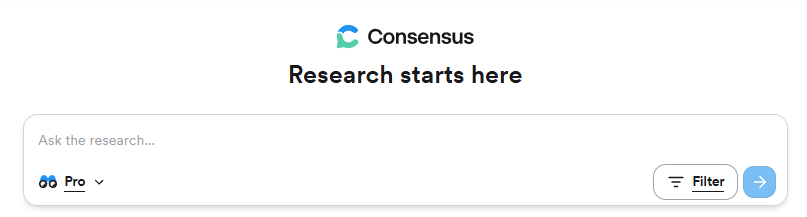

Select your preferred search mode from the dropdown menu in the lower-left corner.
Consensus clearly outlines its recommended search strategies as follows:
- Ask about the relationship between variables
(e.g., “Does creatine improve cognitive function?”) - Pose questions that can be answered with ‘yes’ or ‘no’
(e.g., “Can zinc supplements reduce symptoms of depression?”) - Ask about the effects of a specific phenomenon
(e.g., “What is the economic impact of immigration?”)
Rather than entering a string of keywords, you’ll get better results by posing a clearly defined research question—allowing you to use Consensus more effectively.
Consensus Literature Search Option 1: Get an Overview with Quick Search
Use Quick Search when you want to quickly gain a general overview of the literature related to your research question.
This feature is available with unlimited use under the Free Plan.
Despite being free to use, Quick Search delivers a substantial amount of information to support your initial literature review.
Example of a Quick Search Results Screen
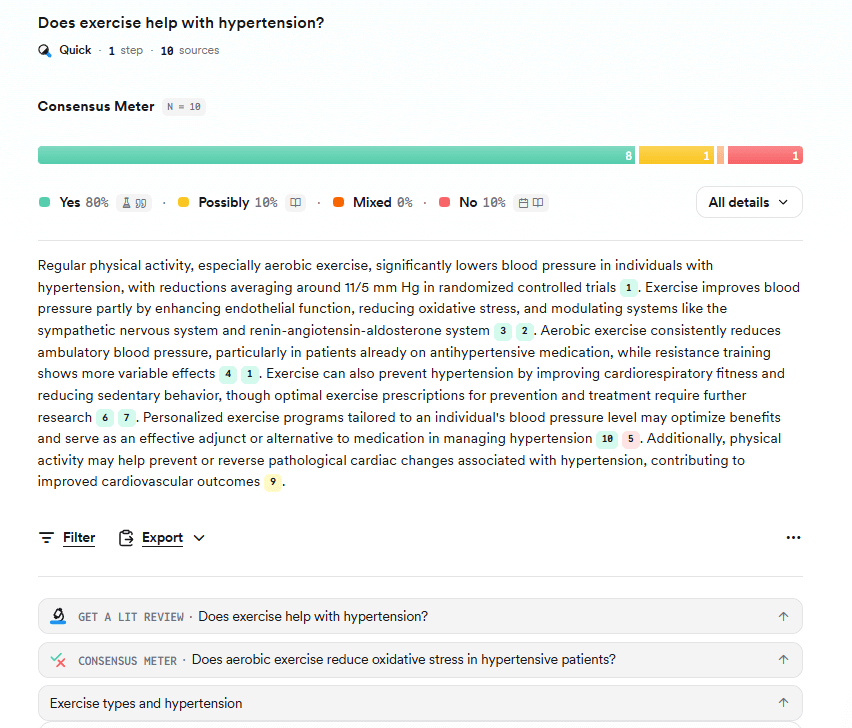
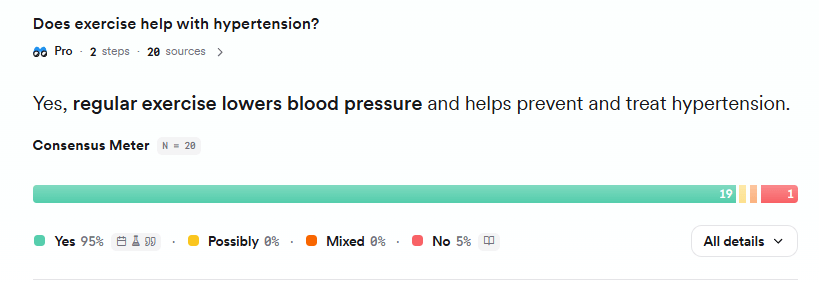
The search results screen also displays the Consensus Meter, a signature feature of Consensus that visually summarizes the overall direction of findings across the relevant literature.
\Overview of the Quick Search Interface/
- Consensus Meter
- Summary of the findings (with citations)
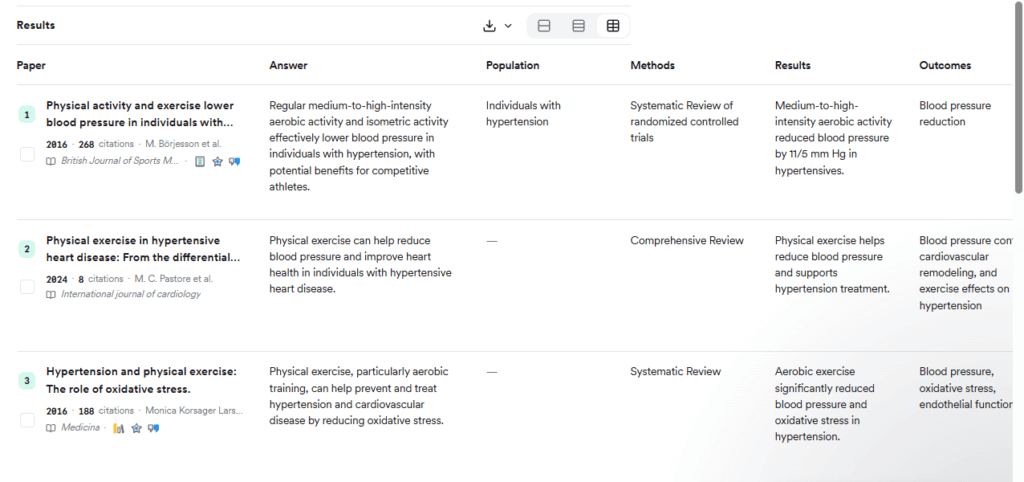
- Detailed view of top papers in a table format
- List of additional relevant studies
Consensus Meter
One of the defining features of Consensus is its results aggregation tool (the Consensus Meter), which synthesizes findings across studies to indicate the overall direction of the evidence.
Let’s try entering a research question that can be answered with “yes” or “no.”
The Consensus Meter categorizes findings from prior studies into “Yes,” “Possibly,” “Mixed,” and “No,” and presents the proportion of studies falling into each category:
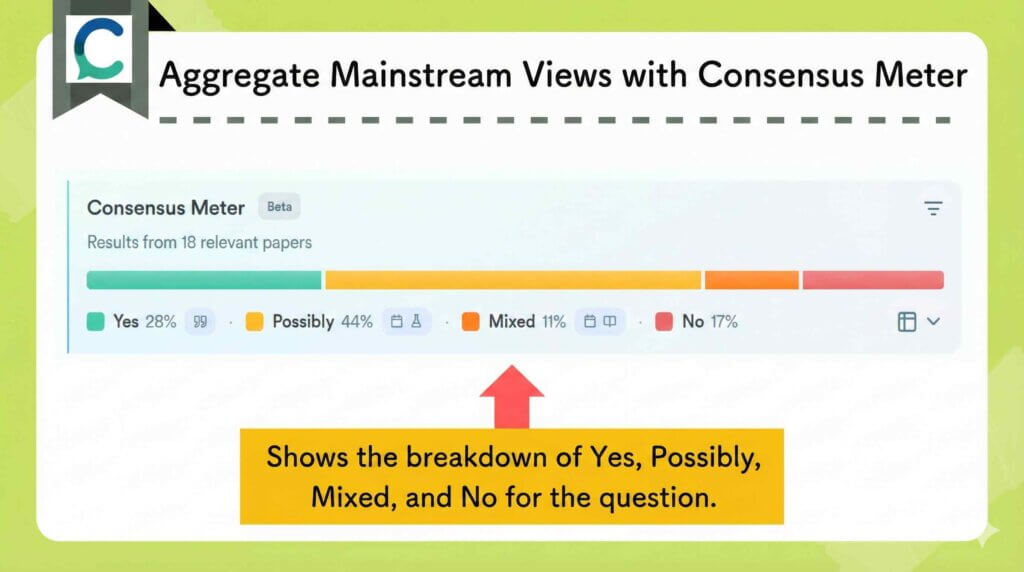
This can be particularly useful when entering a new research area or establishing a new experimental framework, as the Consensus Meter provides a rapid sense of how the existing literature is distributed.
If you find yourself wondering, “What is the dominant view in the literature on this question?”, Consensus enables you to identify the prevailing perspective almost instantly.
Summaries with Citations
Below the Consensus Meter, you’ll find a concise summary that synthesizes the key findings related to your research question.
Clicking on a reference number opens detailed information about the corresponding paper in the right-hand panel.
Detailed Information on Top Papers (Table View)
Below the summary, key information from the top-ranked papers is extracted and presented in a structured table format.
Detailed View of Top Papers (Table Format)
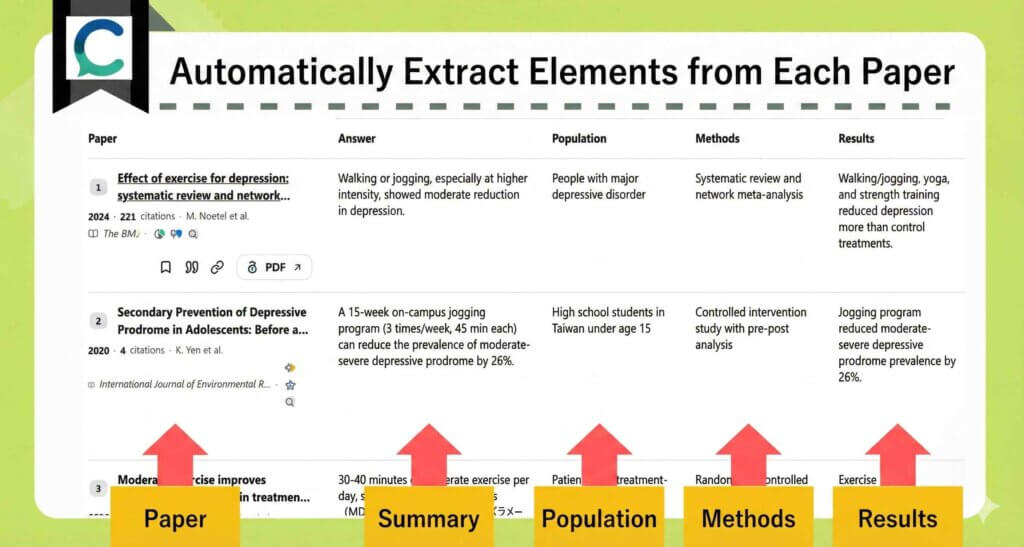
On the free plan, detailed table views are available for up to the top three papers.
To switch additional papers to the table view format, a subscription to the Pro Plan or higher is required.
List of Additional Relevant Papers
Below the table view, you’ll find a list of additional relevant papers.
Another notable strength of Consensus is its clear and intuitive labeling system, which makes it easy to assess the relevance and characteristics of each study at a glance:
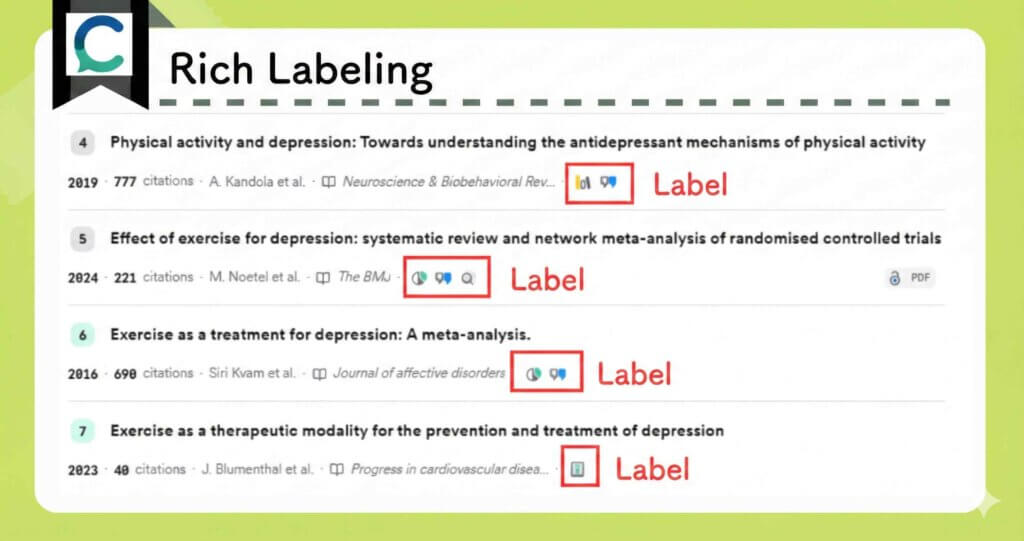

The labeling system includes categories such as:
- Study quality indicators: “Rigorous Journal” and “Very Rigorous Journal”
- Citation impact: “Highly Cited”
- Study design: “RCT,” “Non-RCT Trial,” “Case Report,” and other related classifications
- Research type: markers indicating whether a study is clinical or preclinical (e.g., “Animal Trial”)
When you hover over a label, a brief explanation appears to clarify what it represents:
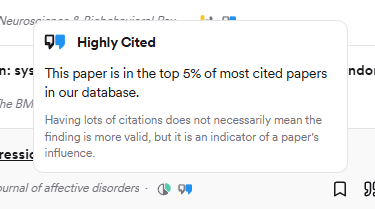
Information that isn’t immediately apparent from the title or journal name alone is clearly visualized, making it much easier to assess a paper’s characteristics at a glance.
Labels are also displayed in the table view for easy reference.
Consensus Literature Search Option 2: Identify Key Papers with Pro Search
The overall output structure of Pro Search is similar to Quick Search; however, Pro Search expands the number of cited papers and provides a more comprehensive summary of the literature.
For example, when I submitted the same research question that I used in the Quick Search, the number of studies reflected in the Consensus Meter increased accordingly:
Quick Search: N = 7
👇
Pro Search: Increased to N = 14
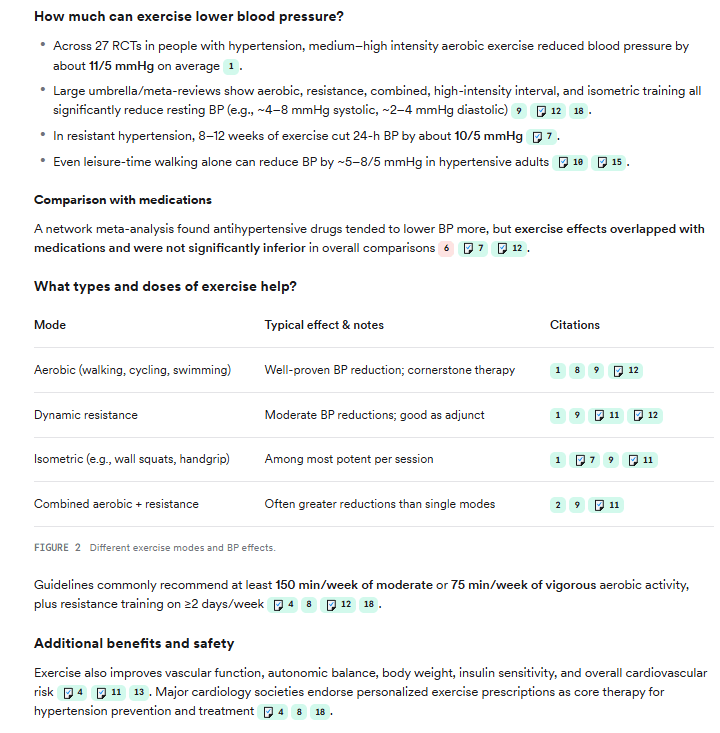
In Pro Search, the summary is expanded to include section headings and tables, offering a more structured and detailed synthesis of the findings.
Example of a Summary with Citations
Consensus Literature Search Option 3: High-Precision Retrieval and Report Generation with Deep Search
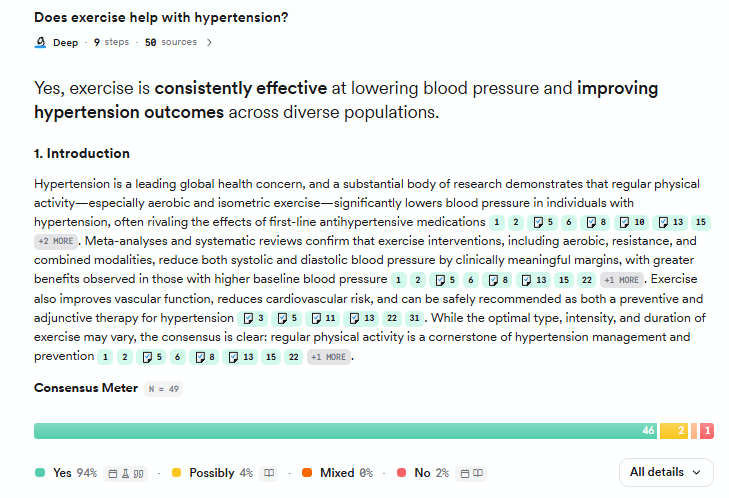
Deep Search significantly enhances the depth and sophistication of the output, delivering a far more comprehensive analysis of the literature.
The output is structured into five sections: Introduction → Methods → Results → Discussion → Conclusion.
Let’s take a closer look at each section!
Consensus Meter and Brief Summary
The Methods section details the specific keywords used in the search, the number of studies screened, and the final number of papers included in the review.

The results section focuses on summaries of particularly influential papers.
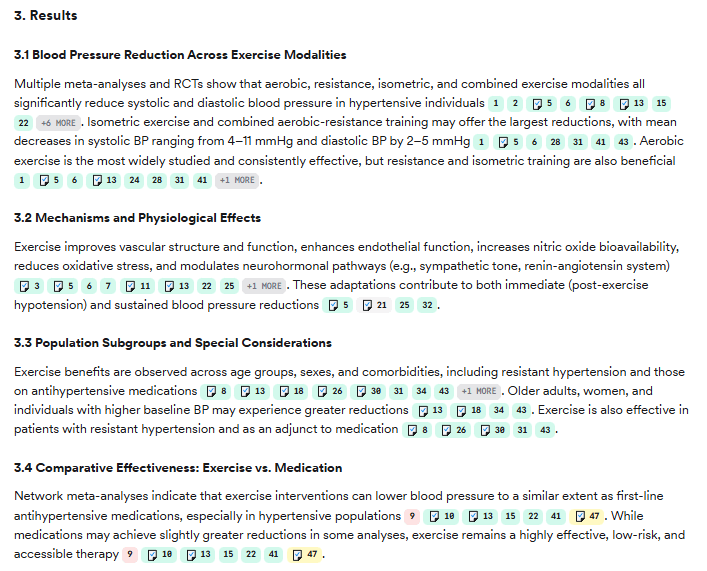
Results Timeline

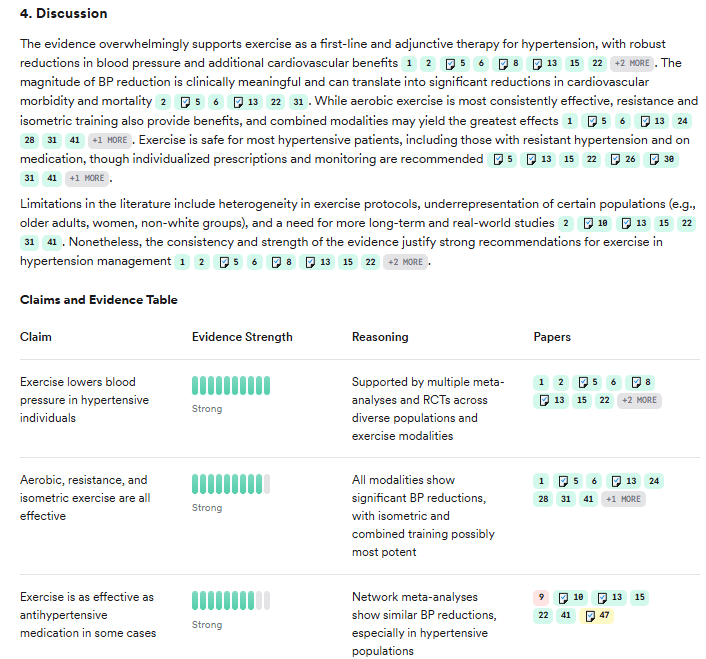
Key arguments and corresponding levels of evidence are organized into a clear, easy-to-understand table.
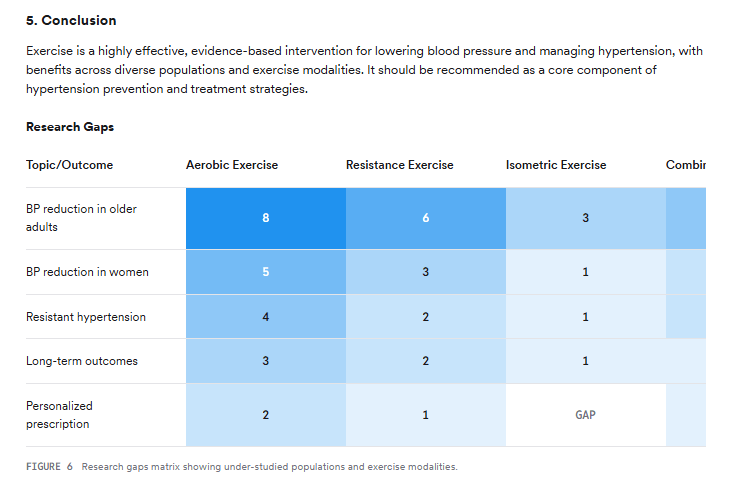
Research Gaps Matrix
A visual matrix illustrates the extent of research activity, with the vertical axis representing study populations and the horizontal axis representing types of exercise.
The figure below conveys the number of studies conducted and the overall accumulation of evidence across each category:
Open Research Questions
Deep Search also identifies unresolved questions in the field and outlines the reasons these issues remain:
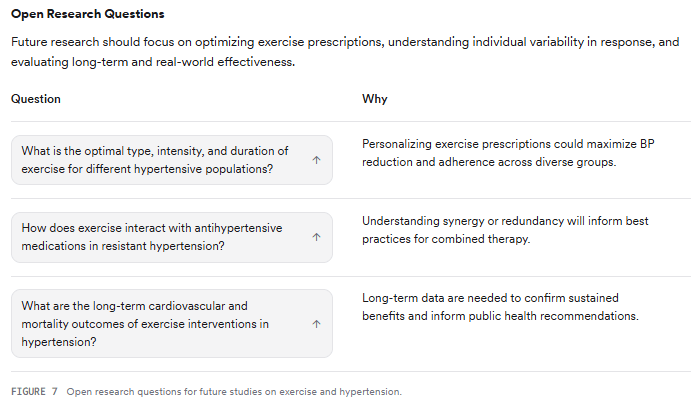
The difference in depth and precision of Deep Search compared with Pro Search is clearly noticeable.
Also, the review is structured around data-driven synthesis, with tables and visual summaries taking a central role.
You can access this feature up to three times per month, even on the free plan!
| Free Plan | Pro Plan | Deep Plan | |
|---|---|---|---|
| Quick Search | |||
| Pro Search | Up to 25 times/month | Unlimited | |
| Deep Search | Up to 3 times/month | Up to 15 times/month | Unlimited |
It’s well worth trying at least once to see how Consensus can support your research workflow.
Additional Useful Features in Consensus
Useful Feature 1: Easy-to-Use Filtering Tools
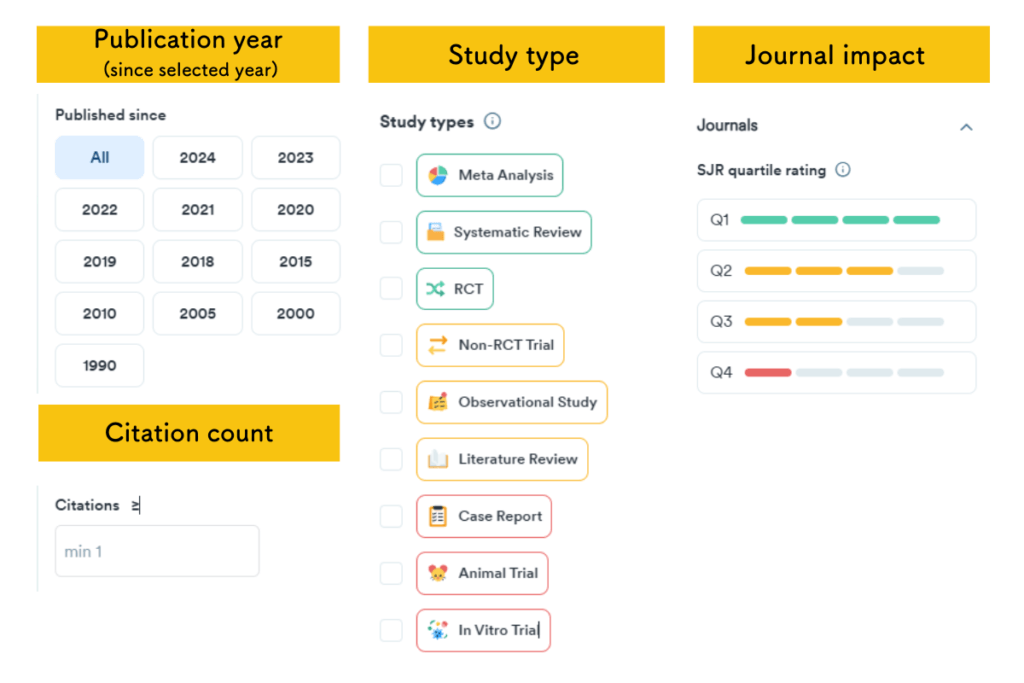
The platform allows you to refine your results using filters such as:
- Article Type
- Publication year
- Exclude preprints (limit to peer-reviewed studies)
- Open access availability
- Whether full-text requests are supported
- Citation count
- Research Methodology
- Study design
- Study characteristics (e.g., sample size, duration)
- Journal Ranking
- Field of Study
- Country
By applying these filters strategically, you can narrow down the evidence base and quickly identify the paper that best fits your specific research criteria!
Useful Feature 2: Study Snapshot
An abstract is displayed on each paper page.
If the abstract alone is not sufficient and you would like to see details of the study by category—such as population, sample size, or experimental methods—you can use the Study Snapshot feature.
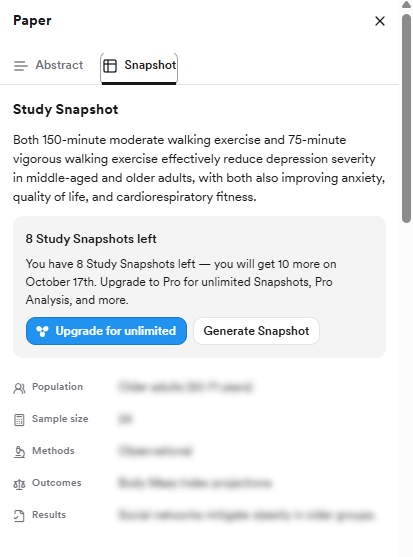
Click “Generate Snapshot” to view the information (as shown in the figure below):
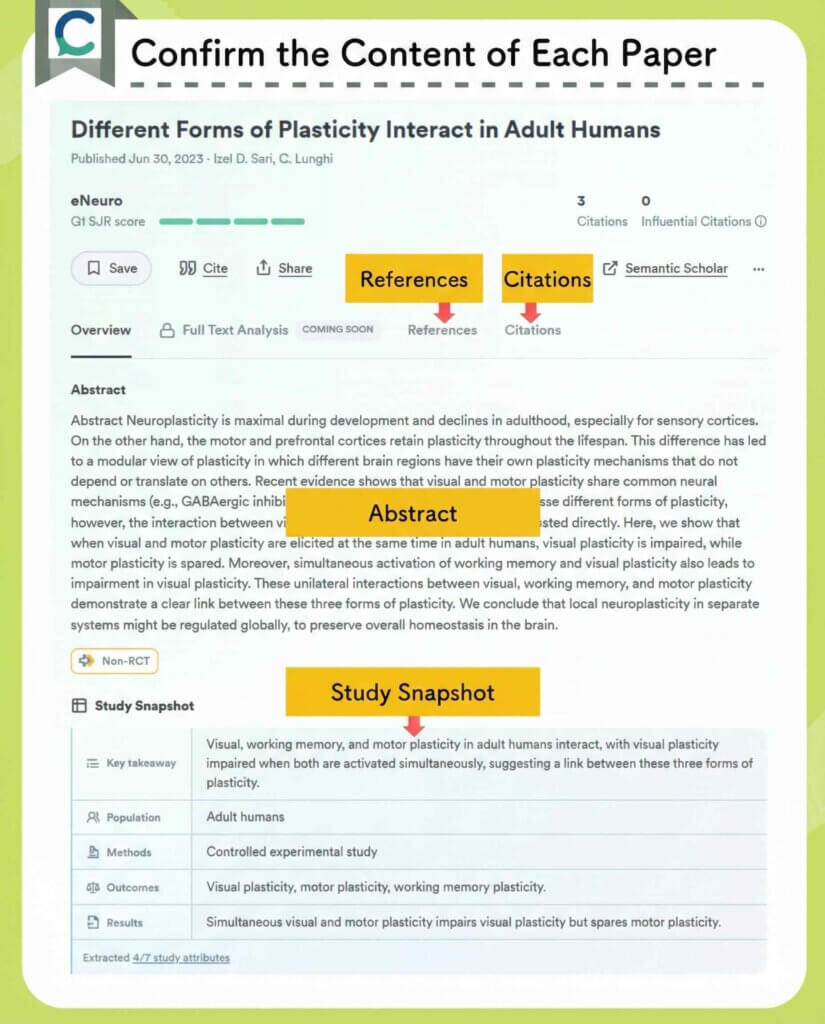
The Study Snapshot feature is convenient because it allows you to quickly grasp an overview of the study.
You can generate up to ten snapshots per month on the Free Plan.
| Free Plan | Paid Plan | |
|---|---|---|
| Study Snapshot | 10 uses per month | Unlimited |
Useful Feature 3: Ask Paper
Click “Ask Paper” at the bottom of the paper page to open the article.
Here, you can use the chat function to examine the content of the article in more detail.
Like Study Snapshot, the Free Plan allows up to ten uses per month.
| Free Plan | Paid Plan | |
|---|---|---|
| Ask Paper | 10 uses per month | Unlimited |
Useful Feature 4: Save Papers and Search Results
You can bookmark papers of interest and save your search results for later reference.
You can also organize your saved papers into lists so you can group related studies together and keep your research tidy:
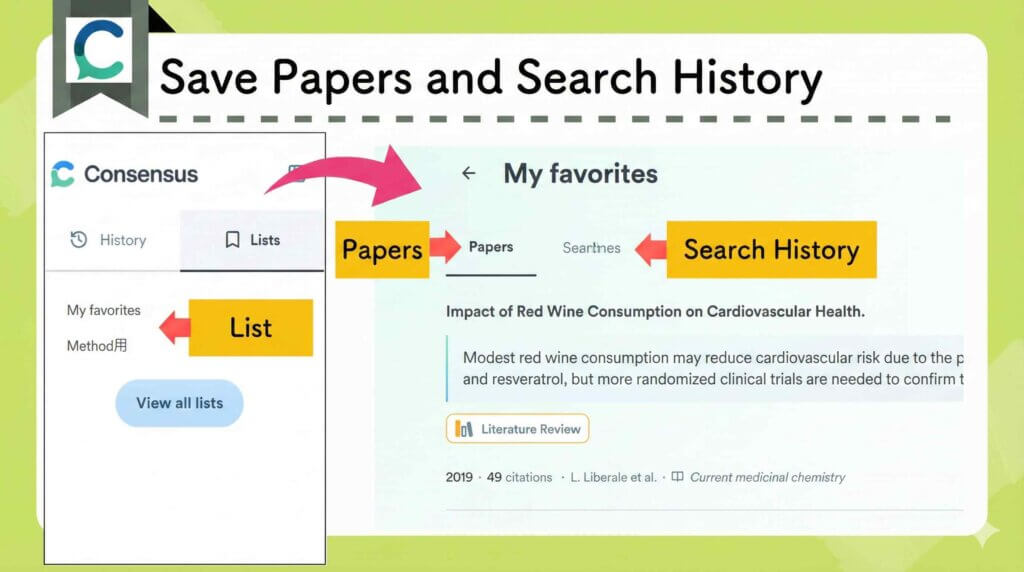
The ability to save your search history is a particularly useful feature of Consensus.
Useful Feature 5: Share Search Results
Click the “Share” button in the upper-right corner of the search results page to quickly share your results.

This is especially convenient when you need to share your findings with collaborators or colleagues.
Consensus Pricing Plans
Consensus offers four pricing plans:
- Free Plan
- Pro Plan
- From US$10/month
- Deep Plan
- From US$45/month
| Free Plan | Pro Plan | Deep Plan | |
|---|---|---|---|
| Annual Fee (USD) | – | $120 | $540 |
| Annual Fee as a Monthly Rate | – | $10 (approximately ¥1,500) | $45 (approximately ¥6,800) |
| Quick Search | |||
| Pro Search | Up to 25 times/month | Unlimited | |
| Deep Search | Up to 3 times/month | Up to 15 times/month | Unlimited |
| Study Snapshot | 10 uses/month | Unlimited | |
| Pro Analysis (equipped with GPT-4) | 10 uses/month | Unlimited | |
| Ask Paper | 10 uses/month | Unlimited | |
In short, if you plan to use Consensus regularly, I recommend a paid plan as it removes many of the platform’s limitations.
Students can access the platform at a significantly discounted rate.
\Students receive 40% OFF the Pro Plan/
- Register with your school email address
Or… - Send an email to student@consensus.app with the following information and follow the instructions you receive:
- The email address associated with your current Consensus account
- Proof of enrollment (e.g., copy of your student ID or academic email address)
- Your expected graduation year
Disadvantages of Consensus
Few Additional Built-In Features
One drawback is that while Consensus is highly specialized for literature search, it’s limited in additional features such as reading support, writing tools, or a built-in research library.
Ask Paper is also relatively simple and streamlined.
If you’re looking for support beyond search capabilities—such as reading assistance, writing tools, and broader research management—an all-in-one platform like SciSpace or Paperguide may be a better fit.
For more details, please visit our pages featuring curated lists of these all-in-one research tools!



Tools Similar to Consensus
SciSpace (All-in-One Research Tool)
SciSpace is a comprehensive, all-in-one research platform built specifically to support researchers throughout the entire research workflow.
From literature search to in-depth reading and comprehension, SciSpace brings a wide range of research functions together in a single platform.
It’s a tool I use regularly.
Key Features of SciSpace
- A unified platform for literature search, analysis, writing, and bibliography management
- High-precision literature searches (especially with Deep Review)
- Reading assistance for clarifying confusing text and interpreting visuals
- Side-by-side comparisons of saved literature in your Library
- Autonomous research agents for automated research workflows
- The AI output quality on the Free Plan is limited
- Premium Plan: from US$7.20 per month
- Advanced Plan: from US$42 per month
(Lowest price available using this site’s 40% OFF coupon)
SciSpace offers a wide range of features, but the features listed below are the ones I especially recommend.
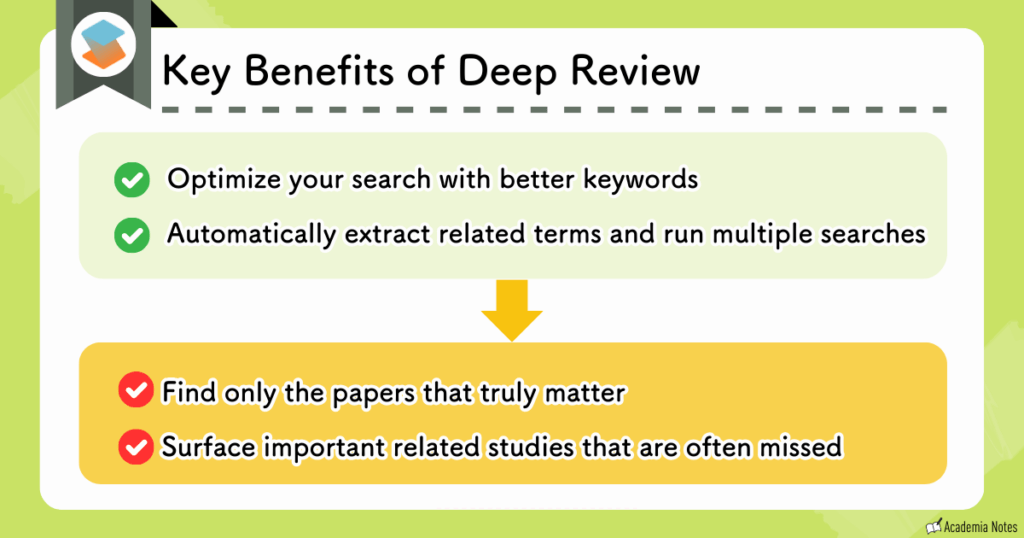
In particular, Deep Review has dramatically improved the accuracy of my literature searches.
Example of a Literature Review
Even without crafting highly detailed prompts, the system is designed so that keywords are automatically refined and optimized through your interaction with the AI:
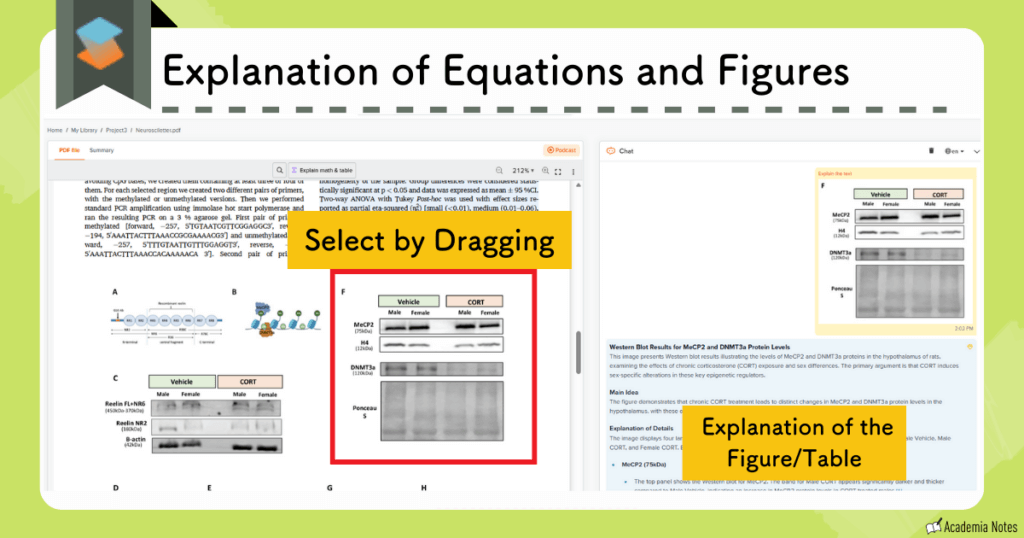
The reading support feature also allows the AI to respond to a wide range of questions about the paper, helping you clarify complex concepts and better understand the content.
It can even interpret and explain figures and tables!
In addition to these features, the platform includes a wide array of practical tools, making it a highly specialized AI solution tailored to the needs of researchers.
Check out SciSpace’s features and pricing in detail here:
Official Website: SciSpace(https://typeset.io/)
User Guide: Learn more about SciSpace
User Guide: Learn more about Deep Review
Elicit (Literature Search)

Key Features of Elicit
- Highly accurate and comprehensive literature searches (especially useful when exploring a new field or preparing a review article).
- When conducting a systematic review, it allows for detailed control over the screening process, enabling the generation of a highly rigorous and precise review.
- For citations included in the generated review, you can verify the exact passages within each source paper.
When a paid upgrade becomes necessary:
- When you want to use the Systematic Review feature
- When you need more detailed information displayed in the search results
- When you’re looking for even higher-precision outputs
- When you want to increase the number of papers included in data extraction
- Plus Plan: from US$10 per month
- Pro Plan: from US$42 per month
Elicit’s greatest strength lies in its highly customizable approach to systematic reviews.
Key Features of Elicit:
- Upload the specific papers you want to include in your systematic review
- Review and refine your study selection criteria
- Adjust the inclusion threshold for eligible papers
- Customize and edit the data fields extracted from each study
Elicit offers greater accuracy than a fully automated approach.
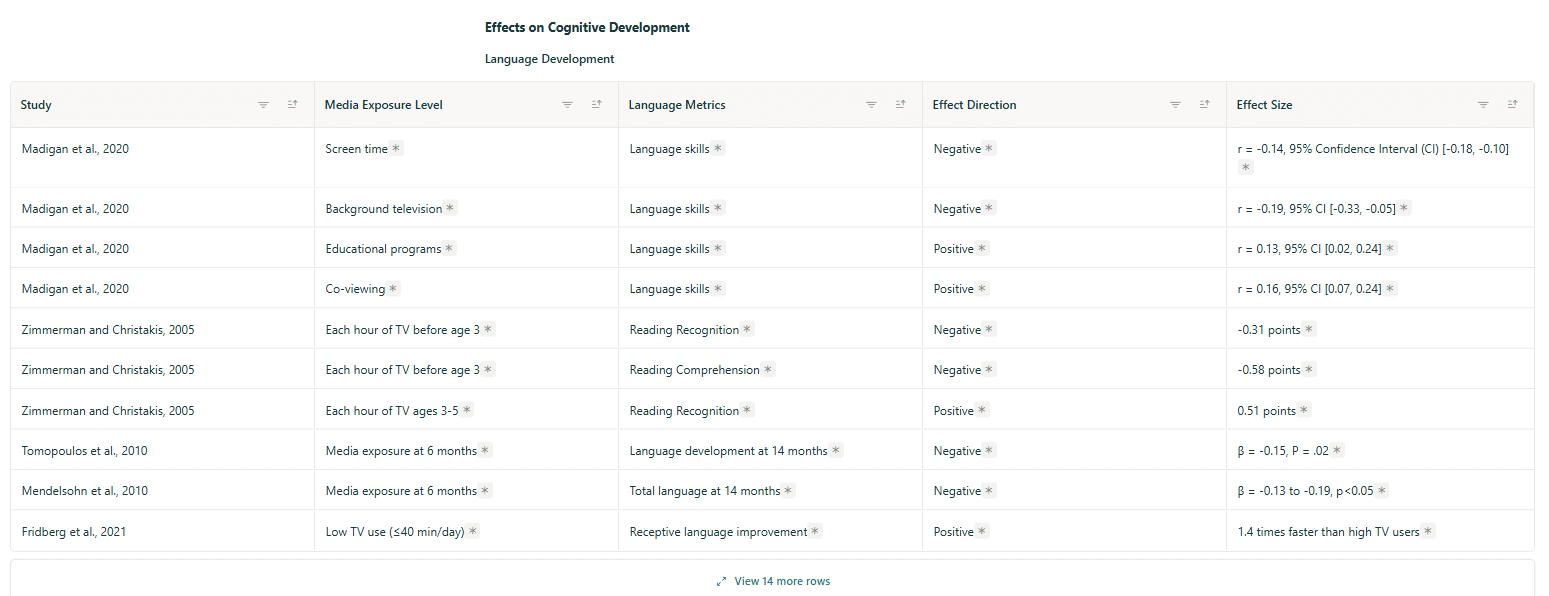
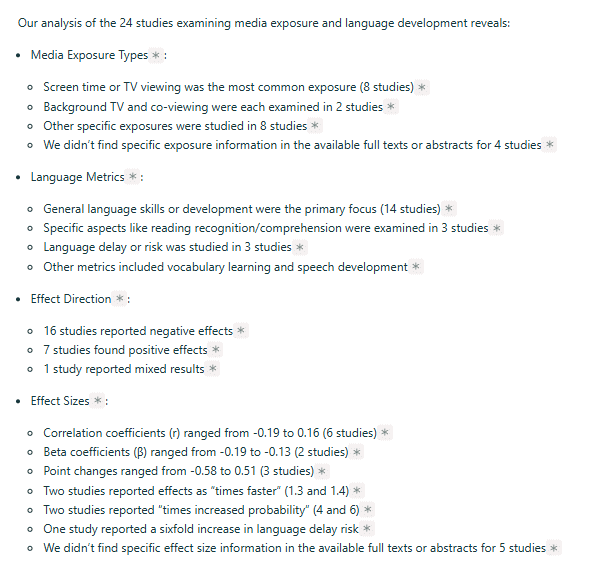
The generated report is structured like a standalone systematic review article.
Example Report
Abstract 👇

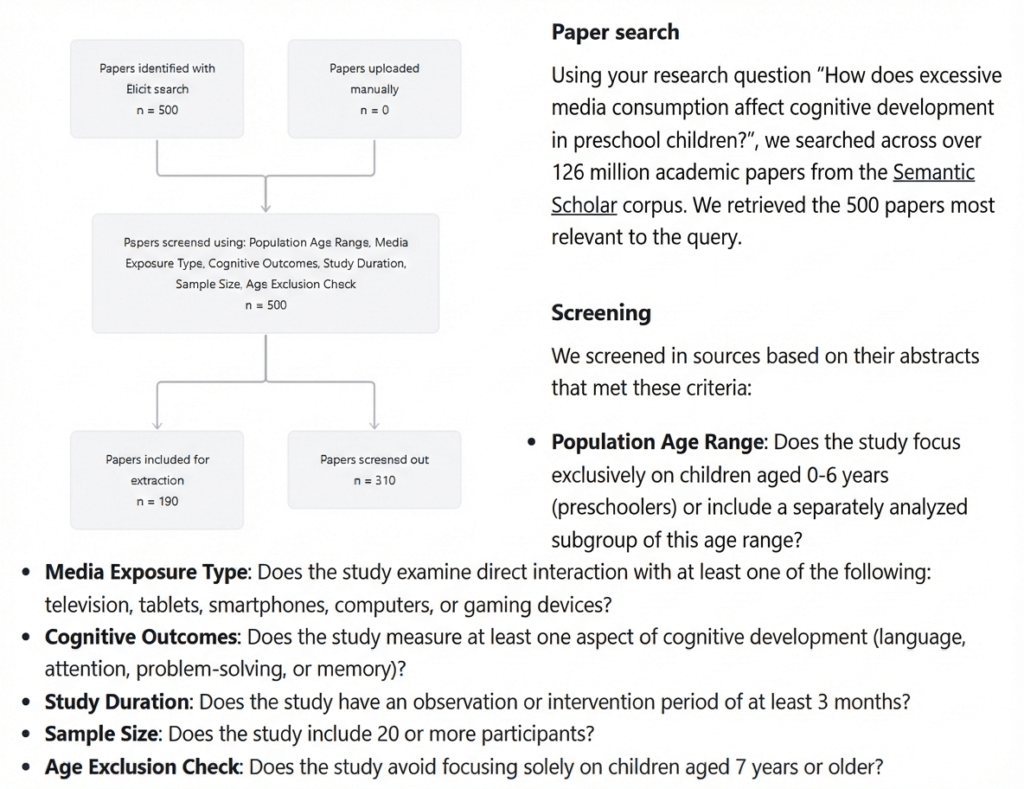
Literature search and screening process 👇
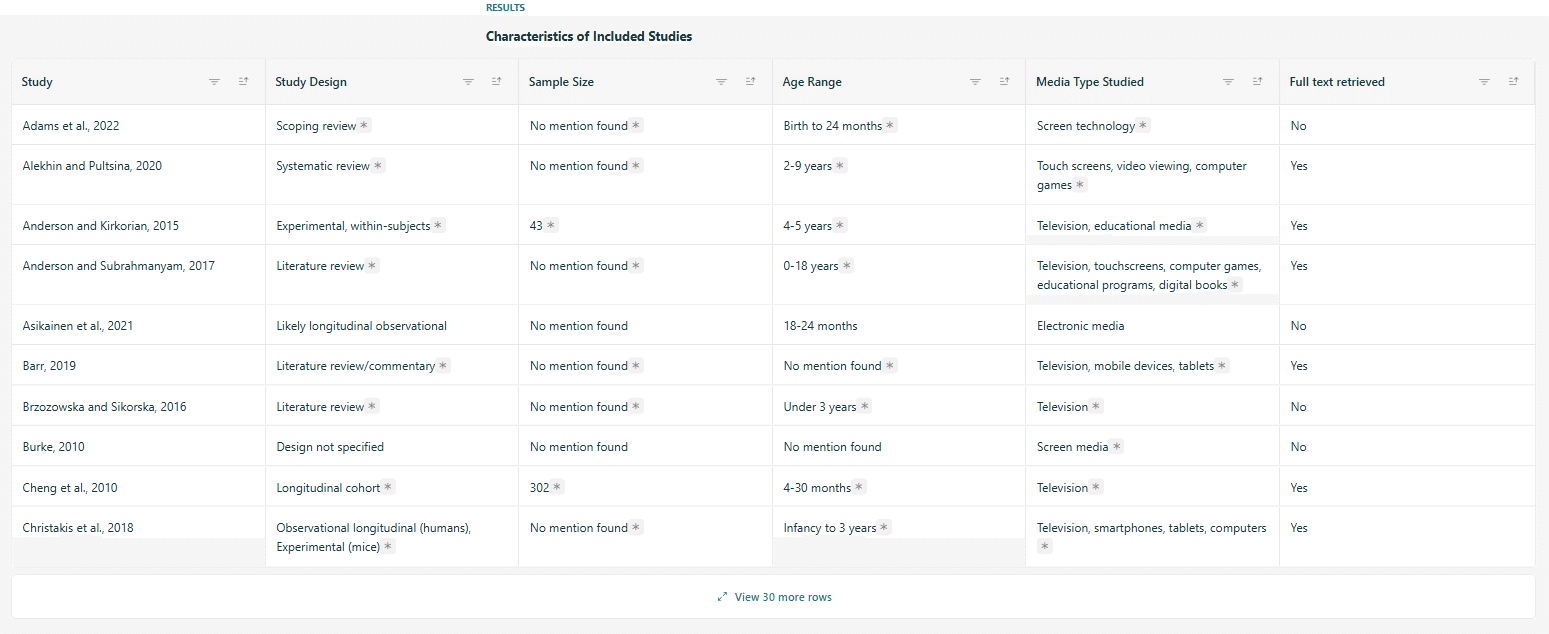
Overview of the top forty studies selected for systematic review 👇
Main outcomes (organized into several subsections presenting quantitative data and effect sizes)👇
Brief bullet-point summary 👇
This report can also be downloaded as a PDF!
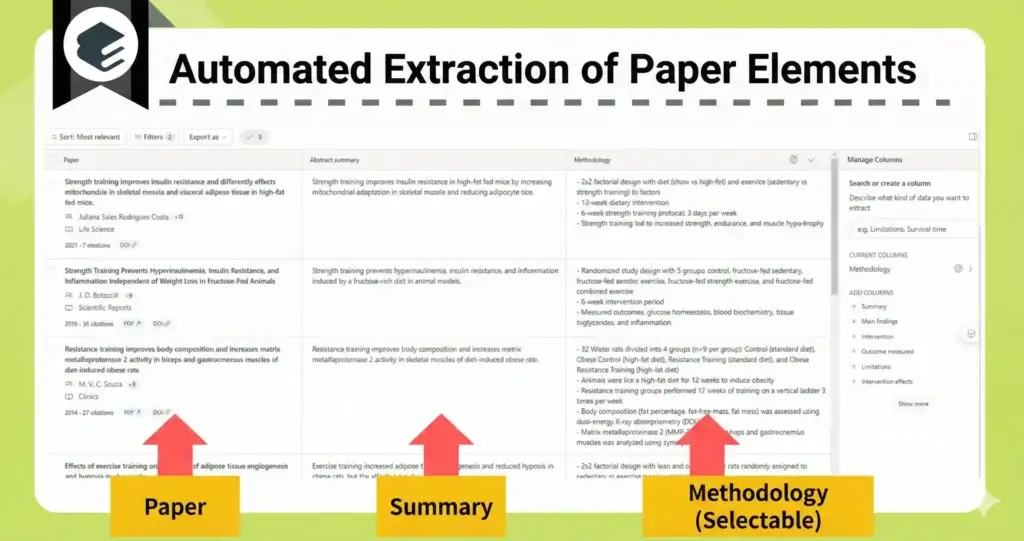
In standard literature searches, Elicit also automatically extracts key elements from each paper:
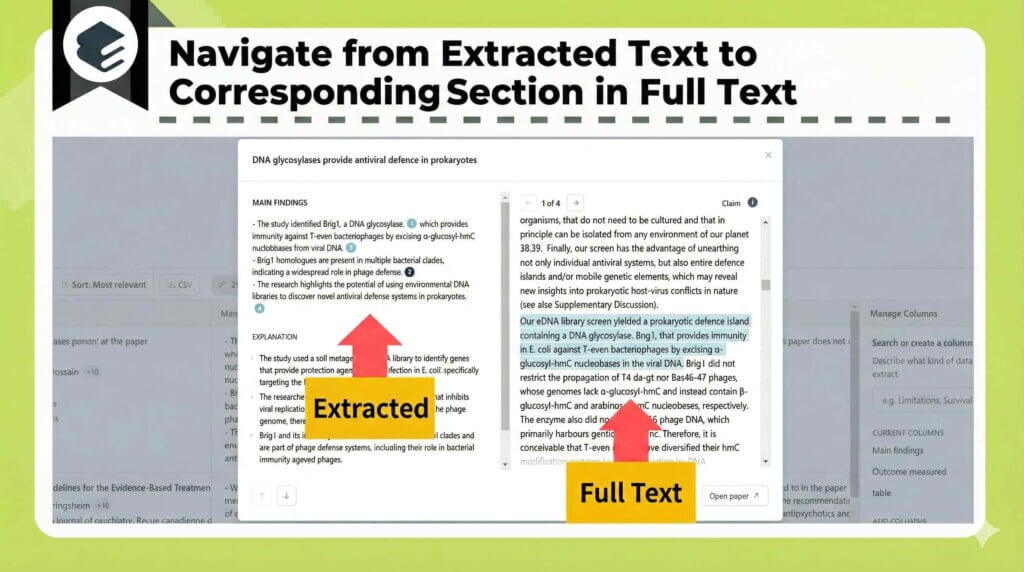
You can also verify each extracted statement directly against the corresponding passage in the original article:
For more details:
Official Website: Elicit(https://elicit.com/)
How to Get Started with Consensus
Create an Account
Click the “Try for Free” button in the upper-right corner to sign up.
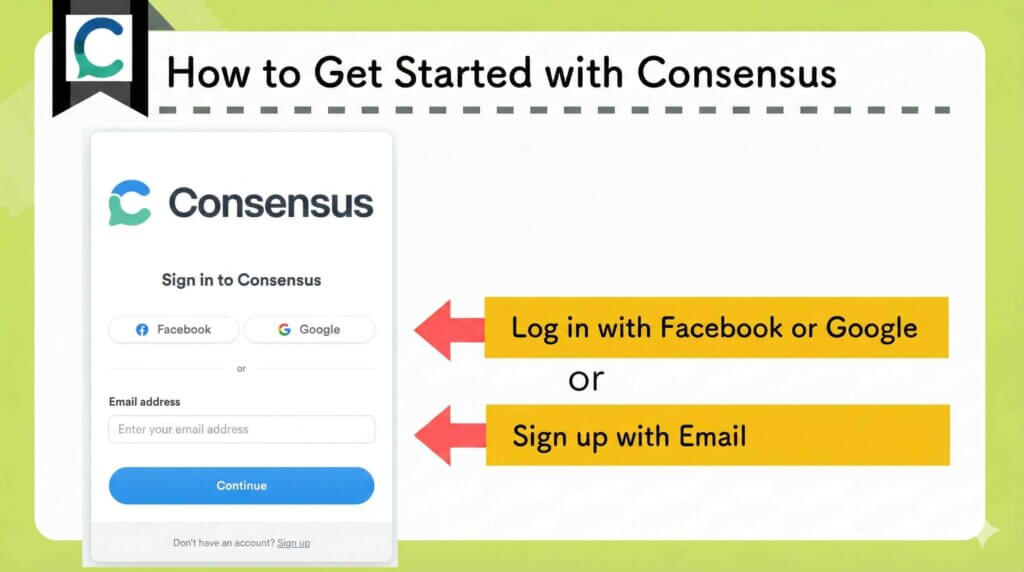
- Sign in with Google
- Sign in with Facebook
- Create an Account
- Email address
- Password
You can use the platform without signing up, but features such as bookmarking are not available unless you create an account. For that reason, I recommend registering.
Consensus FAQ
- Can I use Consensus with the Free Plan?
-
Yes. Even Deep Search can be used up to three times per month free of charge. The pricing structure is designed so that even Free Plan users can use the platform on an ongoing basis.
- How can I get a paid plan at a lower cost?
-
If you’re a student, you can subscribe to the Pro Plan at a 40% discount.
Consensus Summary
With just a simple question, Consensus enables you to quickly gain a comprehensive overview of the research landscape.
With features like the Consensus Meter and built-in labeling, the platform presents findings in a clear and visually intuitive way.
Give it a try!
For More Details:
Official Website: Consensus (https://consensus.app/search/)