
How to Automate Your Literature Review with Elicit: Key Features and Pricing Overview<span class="wtr-time-wrap after-title"><span class="wtr-time-number">16</span> min read</span>
This article introduces Elicit, an AI-powered literature search tool renowned for its precision in finding relevant papers.

“I can’t find the papers I need at all…”
“I’m spending a huge amount of time on literature search…”
These problems can be solved with Elicit.
The effectiveness of literature searches can vary widely depending on the techniques used, such as how keywords are selected and structured.
With Elicit, however, anyone can easily find the papers they need.
Elicit is also characterized by its ability to perform comprehensive searches, which is useful for writing review articles.

Elicit helps ensure that you can identify all relevant studies without overlooking critical papers.
With just the Free Plan, you can use Elicit on a regular basis.
Furthermore, in February 2025, a feature was added that allows you to create high-quality systematic reviews.

Elicit can create a simple review article in one go.
If you want to start using Elicit right away, click here.
Overview of Elicit
Key Features of Elicit
- Highly accurate and comprehensive literature searches (especially useful when exploring a new field or preparing a review article).
- When conducting a systematic review, it allows for detailed control over the screening process, enabling the generation of a highly rigorous and precise review.
- For citations included in the generated review, you can verify the exact passages within each source paper.
When a paid upgrade becomes necessary:
- When you want to use the Systematic Review feature
- When you need more detailed information displayed in the search results
- When you’re looking for even higher-precision outputs
- When you want to increase the number of papers included in data extraction
- Plus Plan: from US$10 per month
- Pro Plan: from US$42 per month
Previously, the free version of Elicit did not support ongoing use, which made it difficult to include in one’s regular research workflow.
However, it has recently been improved and is now available for free!
Moreover, Elicit’s search accuracy has been improved dramatically, and the results interface is now much easier to navigate and interpret.
Elicit has quickly become an everyday tool in my research workflow.
In particular, Elicit is highly effective when you need to comprehensively capture all studies related to a specific keyword or concept.
This makes it a powerful tool for minimizing the risk of overlooking relevant literature.
Recently, a “Systematic Review” function has been added, further strengthening Elicit’s capacity for comprehensive literature coverage.
When exploring a new research area or drafting a review article, few tools are as capable and efficient as Elicit.
Try it for free first!

This article also explains when upgrading to a paid plan becomes necessary.
Official Website: Elicit (https://elicit.com/)
Three Types of Literature Search
Let’s introduce Elicit’s key features now.
Elicit offers three types of literature search:
Literature Search Type 1: Systematic Review
In a nutshell, Elicit’s Systematic Review function uses AI to fully automate the main steps of a systematic review, while also allowing researchers to make adjustments at each stage.
- It takes just five steps to generate a report
- Users can make adjustments at each stage
A key advantage is that users can actively refine and customize the output.
The Systematic Review feature creates highly accurate reviews, but it is only available under the Pro Plan, which is Elicit’s top-tier plan.
| Free Plan | Plus Plan (From US$10/month) | Pro Plan (From US$42/month) | |
| Systematic Review |
The process for creating a systematic review is outlined below.
There are five steps from initial query to final output, with the user reviewing and refining the results at each stage:
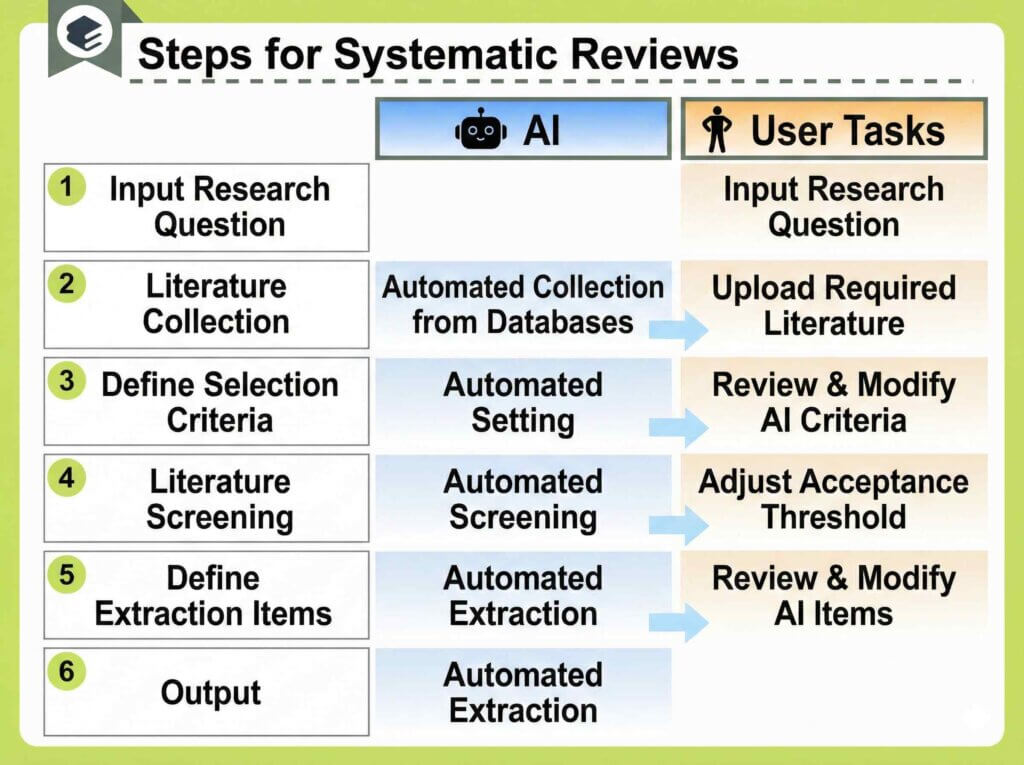
Key Points:
- Upload the necessary papers yourself
- Review and refine the study selection criteria
- Adjust the inclusion threshold for selected papers
- Confirm and modify the data extraction fields for each study

Being able to review and refine at each stage delivers greater accuracy than a fully automated approach.
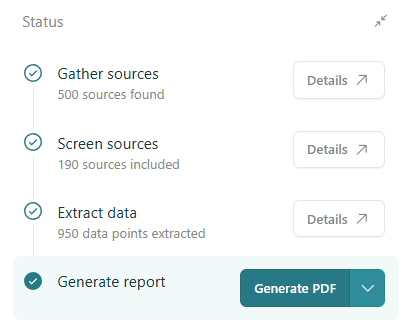
The generated report resembles a standalone paper structured as a systematic review:
Example of a Generated Report
Abstract 👇

Literature search and screening process 👇
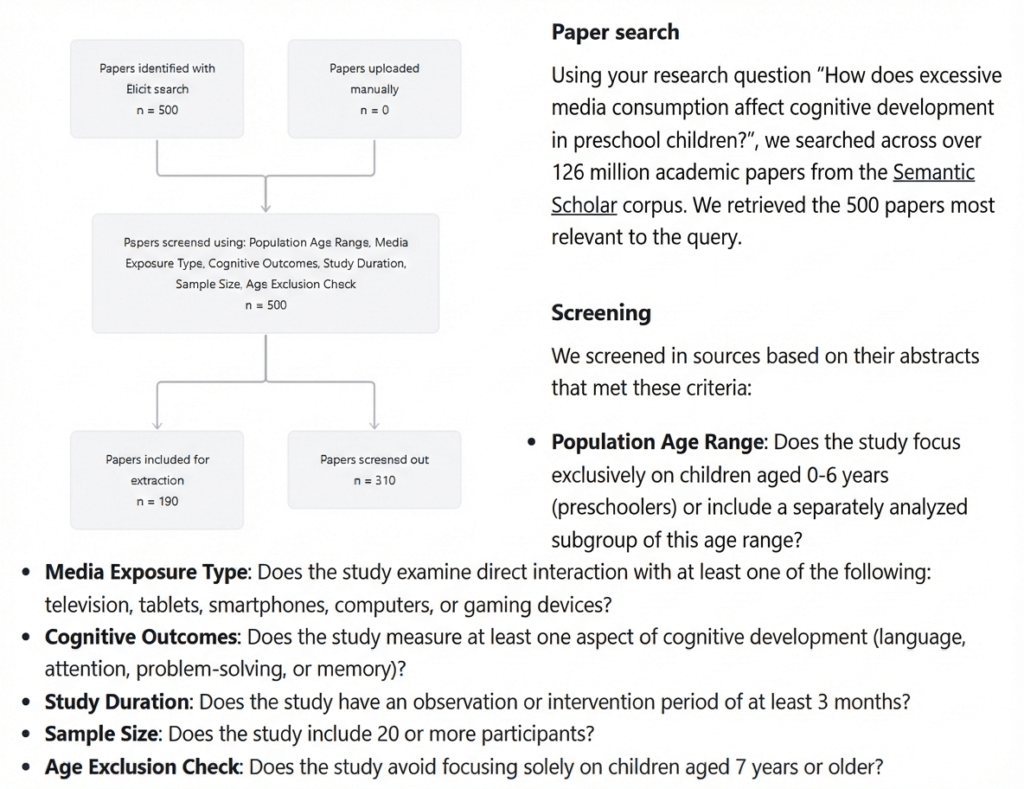
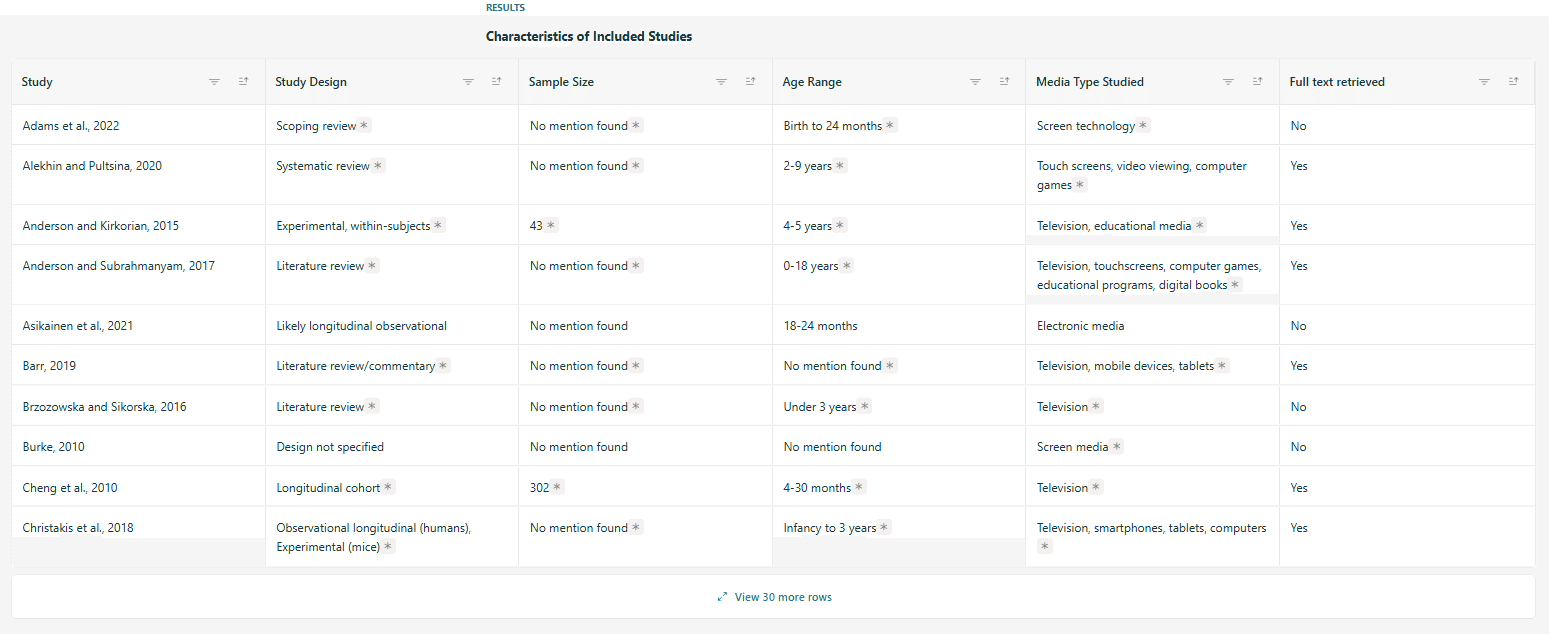
Overview of the top forty studies selected for systematic review 👇
Main outcomes (organized into several subsections that include quantitative data and reported effect sizes) 👇
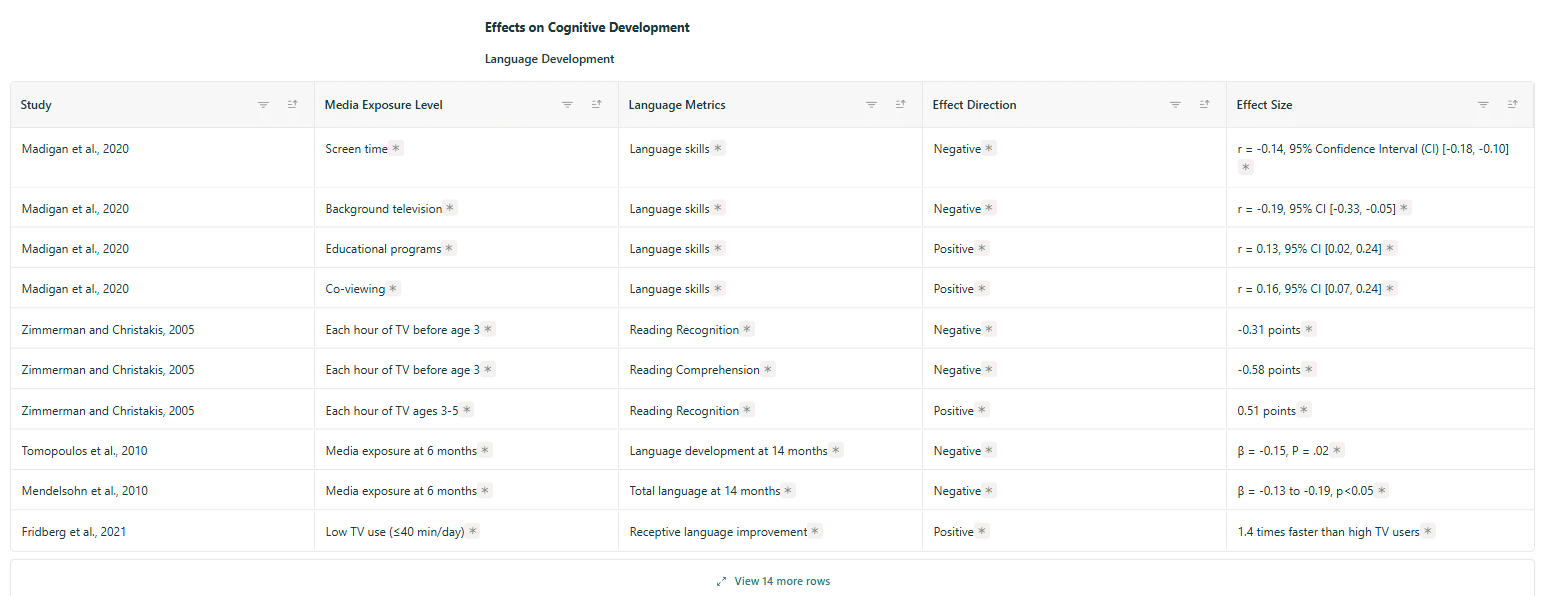
Concise summary in bullet-point form 👇
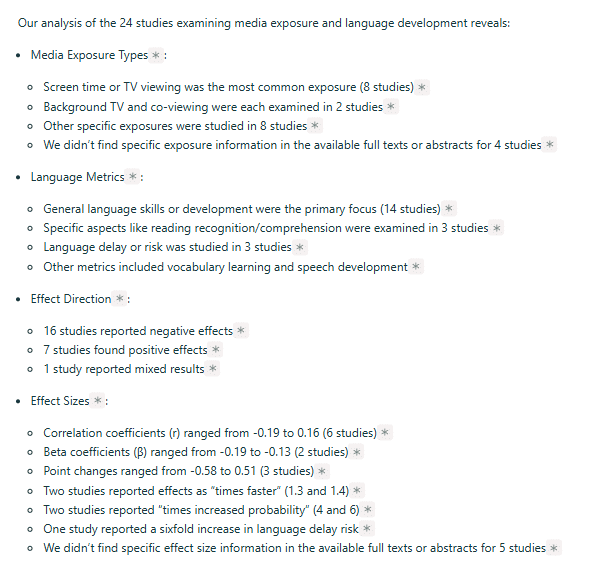

This report can also be downloaded as a PDF!
I highly recommend Elicit to researchers who are in the following situations:
・Writing a review article or conducting a systematic review
・Preparing an original manuscript
・Exploring or entering a new research area
Literature Search Type 2: Research Report
Research Report is a simplified version of Systematic Review.
Unlike the Systematic Review workflow, there is no intervention during the screening process—everything is handled automatically.
Also, the number of papers screened and amount of data extracted is reduced.
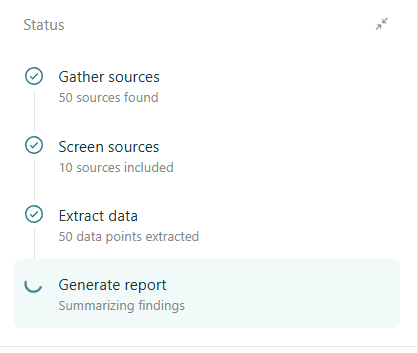
At this stage, if you would like to expand the number of included studies, you will need to upgrade to the Plus Plan.
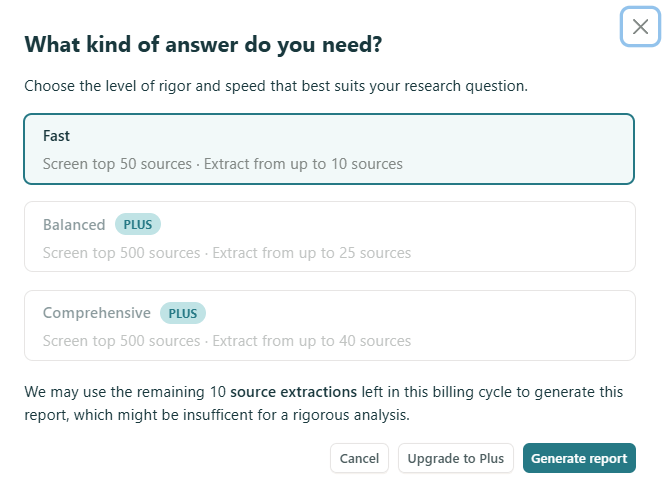
That said, the Free Plan still generates a surprisingly detailed and substantive output.
Literature Search Type 3: Find Papers
Elicit allows for very accurate literature searches.
Search across a database of more than 125 million academic papers
Elicit’s database contains over 125 million papers, and it searches for the articles most relevant to your research question.
Receive a citation-backed summary in response to your research question
When you enter a research question in the search field, Elicit generates a citation-backed summary synthesizing the top eight relevant papers in response to your query:
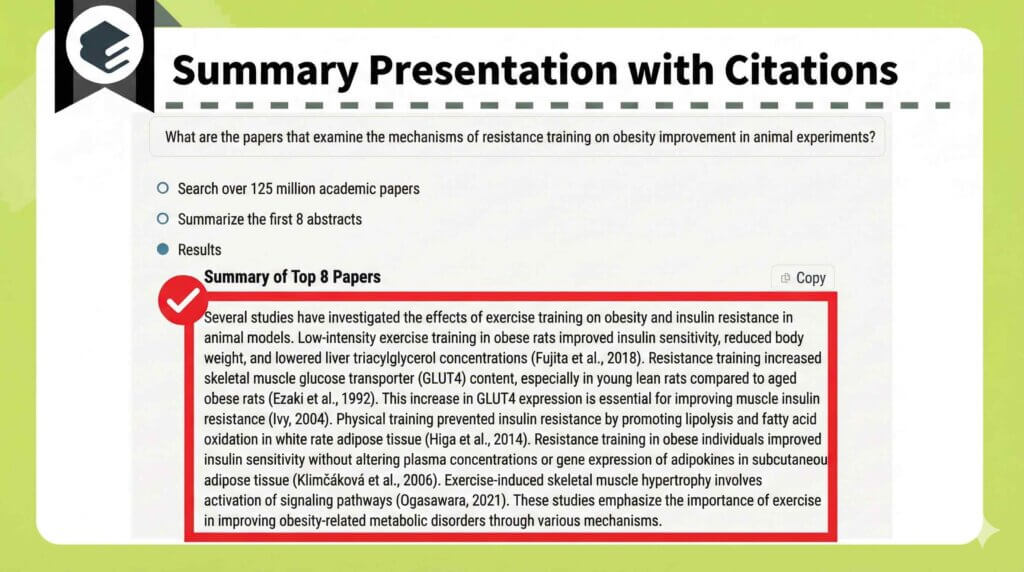
Note: While you can enter search queries in Japanese, the output is generated in English only (the example shown above has been translated using the browser’s built-in translation feature).
You may find it helpful to use an external translation tool such as DeepL if needed.
Automatically extract key elements from each paper
In addition to the paper title and information, a summary is automatically generated in the search results screen (as shown in the image below).
In addition, you can add further data fields as needed by selecting them from predefined options.
You can see at a glance what kind of experiment was conducted and what the results were.
This helps eliminate the common frustration of navigating to a paper, reading the abstract, and realizing it isn’t relevant to your research question—saving both time and effort.
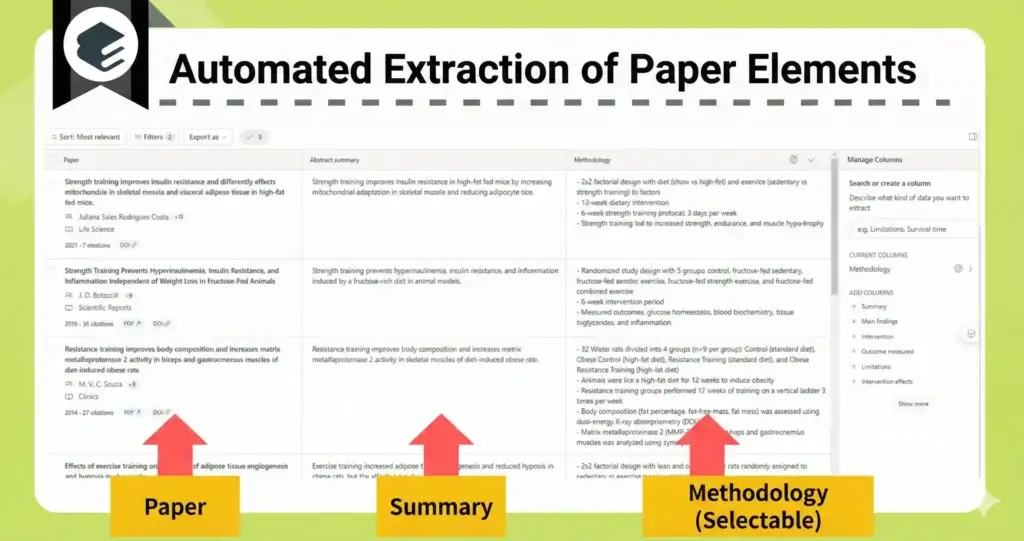
There are two great things about this table:
- You can customize the specific data fields you would like to extract
- By clicking on an extracted sentence, you can jump directly to the corresponding section in the full text
1: Customize the specific data fields you want to extract
You can edit the columns to extract the information you want from a paper.
For example, you can extract specific information such as “What is the age of the population?” or “What dosage of the administered compound was used?” (you can also enter these prompts in Japanese).
In addition, a set of default data fields is available, which you can select from as needed:
- Summary
- Main Findings
- Intervention
- Outcome Measured
- Limitations
- Intervention Effects
2. Jump directly to the corresponding section in the full text by clicking on an extracted sentence
If you want to check the contents of the paper related to the extracted sentence, you can move to the corresponding part of the full text by clicking on the sentence:
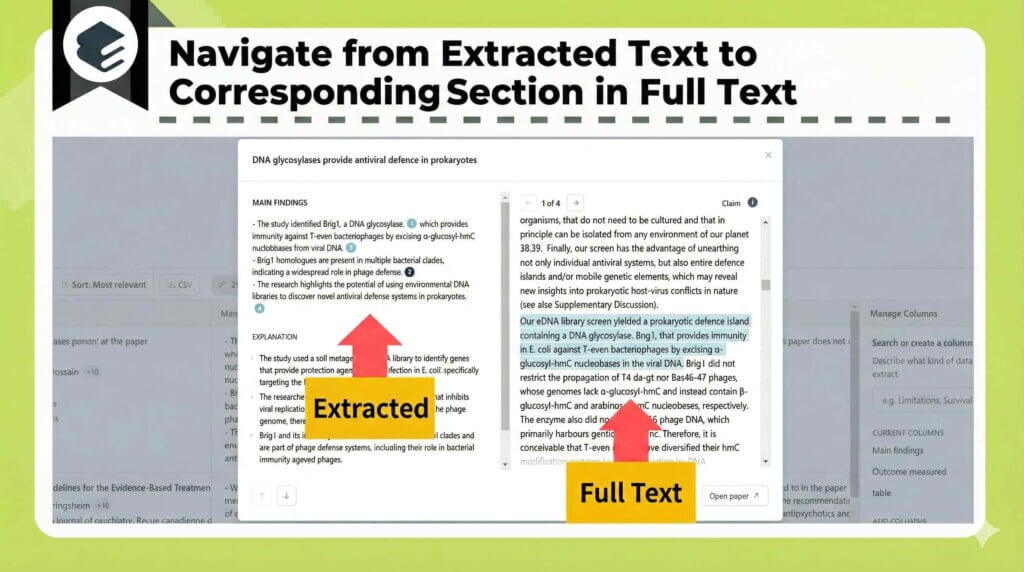
Moreover, when you turn on High Precision Mode (available with a paid plan), numbers are assigned to each sentence of the extracted text, allowing you to check the cited parts in detail.
For critical data fields, I suggest enabling High Precision Mode to improve the reliability of the extracted information.
Please note that the following features are subject to limitations depending on your subscription plan:
- The number of columns available when extracting information from a paper
- Access to High Precision Mode, as well as the number of times it can be used
Easy-to-use search filters
Elicit also offers an intuitive and highly usable filtering system:
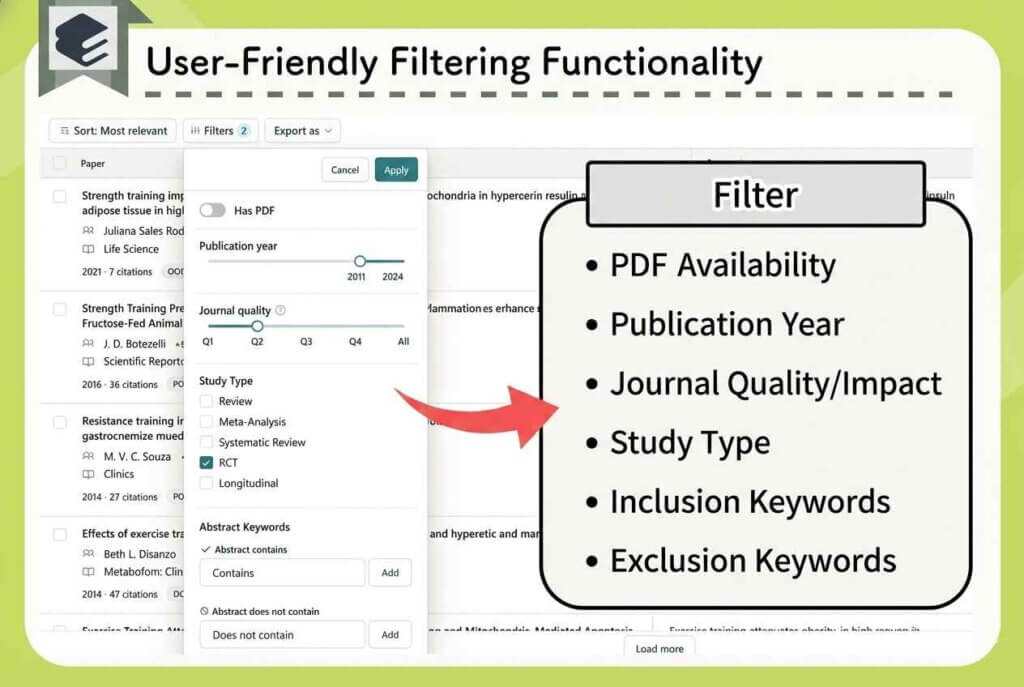
Available filters include the following:
- PDF availability
- Year of publication
- Journal impact or relevance
- Study type
- Required keywords
- Excluded keywords
Additional Features of Elicit
Extract Data from Papers and Organize It into a Table
Elicit also includes a feature that extracts content directly from uploaded PDF files and organizes the information into structured, concept-based tables.
By using Elicit’s data extraction function:
- You can understand the contents of the paper at a glance
- You can do a comparative analysis of different papers
When you upload a paper to “Extract Data from PDFs,” Elicit automatically generates a structured table like the one shown below.
You can understand the contents of the paper at a glance!
The ability to edit table fields or switch specific columns to High Precision Mode follows the same interface and workflow as the literature search screen.
Please note that the number of PDFs you can extract data from is limited depending on your subscription plan.
To compare multiple studies, upload the selected papers together and generate a consolidated table for side-by-side analysis.
By doing so, you may notice, for example, that the experimental conditions in one study are slightly different from the others, or you may be able to gain insight into the question of why a particular study reports conflicting results.
There is a lot to be gained by looking at multiple papers side-by-side!
Above, I’ve provided an overview of Elicit’s core features.
In terms of literature search performance, I feel that Elicit operates at a high level of performance and, in many cases, surpasses other AI-based research tools.
In the past, continuous use was not possible with the Free Plan. However, the pricing structure has since been revised, and it is now possible to keep using Elicit without upgrading to a paid plan.
If you require access to more advanced features, consider upgrading to a paid plan.
Official Website: Elicit (https://elicit.com/)
Elicit Pricing Plans
Elicit offers three pricing plans:
- Free Plan
- Plus Plan (from US$10 per month)
- Pro Plan (from US$42 per month)
Paid Plan Pricing
| Plus Plan | Pro Plan | |
| Monthly Subscription (USD) | $12/month | $49/month |
| Annual Subscription (USD) | $10/month ($120/year) | $42/month ($499/year) |
Differences Between Elicit’s Plus Plan and Pro Plan
When it comes to selecting a plan, keep the following considerations in mind:
- If you use Elicit on a daily basis, the Plus Plan is convenient
- Upgrade to the Pro Plan when you want to write review articles or systematic reviews
The newly added Systematic Review feature can only be used with the Pro Plan.
With Elicit, you can perform unlimited literature searches with just the Free Plan.
The main differences between the two paid plans are:
- The amount of data that can be extracted from a given paper
- The number of columns you can use when extracting information
- Availability of High Precision Mode
- Ability to export files
| Free | Plus | Pro | |
| Literature Search | Unlimited | Unlimited | Unlimited |
| Systematic Review | |||
| Data Extraction | Up to 20 PDFs/month | Up to 50 PDFs/month | Up to 200 PDFs/month |
| Number of Columns | Up to 2 columns | Up to 5 columns | Up to 20 columns |
| High Precision Mode | Up to 1 column per list | Unlimited | |
| Paper Chat | Unlimited, up to 4 papers at a time | Unlimited, up to 8 papers at a time | Unlimited, up to 8 papers at a time |
| CSV/BIB/RIS Export |
Try starting with the Free Plan, but if you find yourself thinking:
“I want to display more items in my results table.”
“I need higher-accuracy extraction for my tables.”
“Twenty PDF extractions per month isn’t enough.”
then it may be time to consider upgrading to the Plus Plan.
For those of you who are thinking:
“I want to use systematic reviews!”
consider upgrading to the Pro Plan.
Advantages of Elicit
Integration with Zotero
One of the things I like best about Elicit is that it can be integrated with Zotero, allowing you to:
- Upload the papers you want to analyze directly from Zotero
- Download and save selected papers from Elicit search results straight into your Zotero library

One of the most helpful features is that it eliminates the need to constantly switch back and forth between PDFs!
Shared Search History
Search history in Elicit is automatically saved in the Notebook.
Because you can share your Notebook with colleagues and co-authors, you can easily exchange updates such as,
“These are the papers I’m referencing,” or “Here’s another relevant study I found.”
These exchanges can be done without disrupting your workflow.
Extract Information from Multiple PDFs via Chat
Similar to tools like ChatGPT and ChatPDF, Elicit allows you to select a paper and ask questions about its content in a conversational, chat-based format.
You can also select multiple papers at once and pose a single question across several PDFs, and Elicit will synthesize the relevant information from all selected studies into a consolidated response.
Notifications About Updates
Elicit is constantly being improved.
Even small improvements (complete with explanations and images) are shared in detail to registered users.
Disadvantages of Elicit
Very Few Features Beyond Literature Search
One disadvantage of Elicit is that it’s mainly a tool for literature search and lacks other features such as reading support, writing support, and a library.
If you are looking for a tool that offers research assistance beyond literature search, I recommend all-in-one platforms like SciSpace or Paperguide.
For details, please see the articles available on this site!



How to Get Started with Elicit
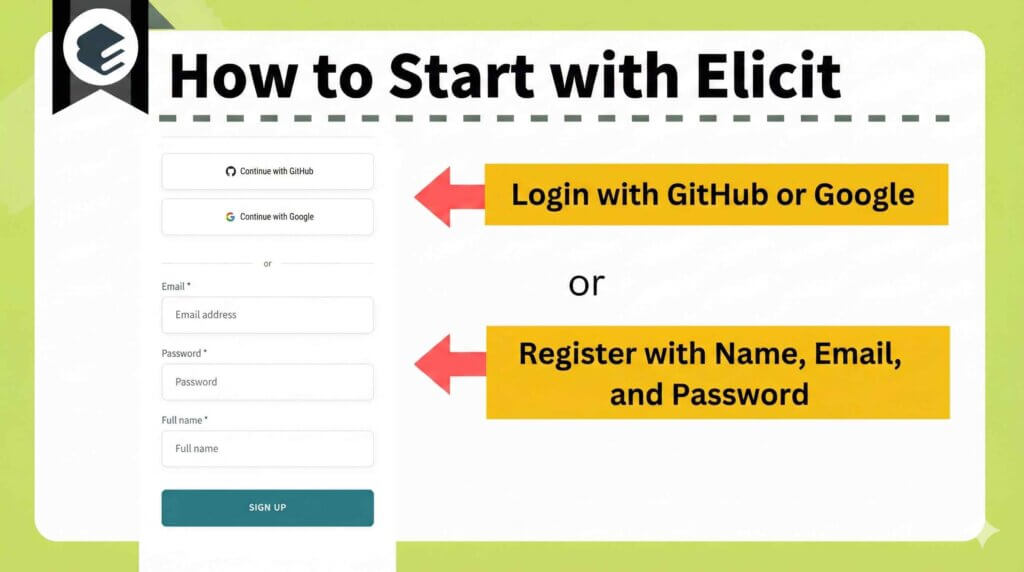
Getting started with Elicit is straightforward, and there are three main ways to begin using the platform:
- Sign in with GitHub
- Sign in with Google
- Create an account by entering your
・Name
・Email address
・Password
How to Upgrade to a Paid Plan
When you want to upgrade, click the “Pricing” button in the top-right corner of the start screen.
From there, select the Plus Plan or Pro Plan.
You can save money by choosing an annual subscription.
After selecting a plan, proceed to the payment screen.
Tools Similar to Elicit
SciSpace (All-in-one)
SciSpace is a comprehensive, all-in-one research platform built specifically to support researchers throughout the entire research workflow.
From literature search to in-depth reading and comprehension, SciSpace brings a wide range of research functions together in a single platform.
It’s a tool I use regularly.
Key Features of SciSpace
- A unified platform for literature search, analysis, writing, and bibliography management
- High-precision literature searches (especially with Deep Review)
- Reading assistance for clarifying confusing text and interpreting visuals
- Side-by-side comparisons of saved literature in your Library
- Autonomous research agents for automated research workflows
- The AI output quality on the Free Plan is limited
- Premium Plan: from US$7.20 per month
- Advanced Plan: from US$42 per month
(Lowest price available using this site’s 40% OFF coupon)
SciSpace offers a wide range of features, but the features listed below are the ones I especially recommend.
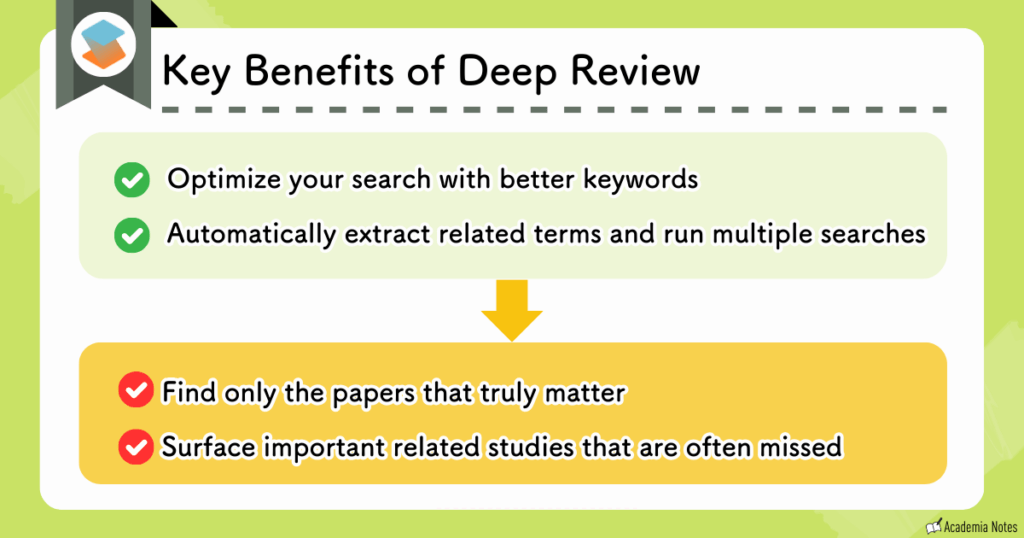
In particular, Deep Review has dramatically improved the accuracy of my literature searches.
Example of a Literature Review
Even without crafting highly detailed prompts, the system is designed so that keywords are automatically refined and optimized through your interaction with the AI:
The reading support feature also allows the AI to respond to a wide range of questions about the paper, helping you clarify complex concepts and better understand the content.
It can even interpret and explain figures and tables!
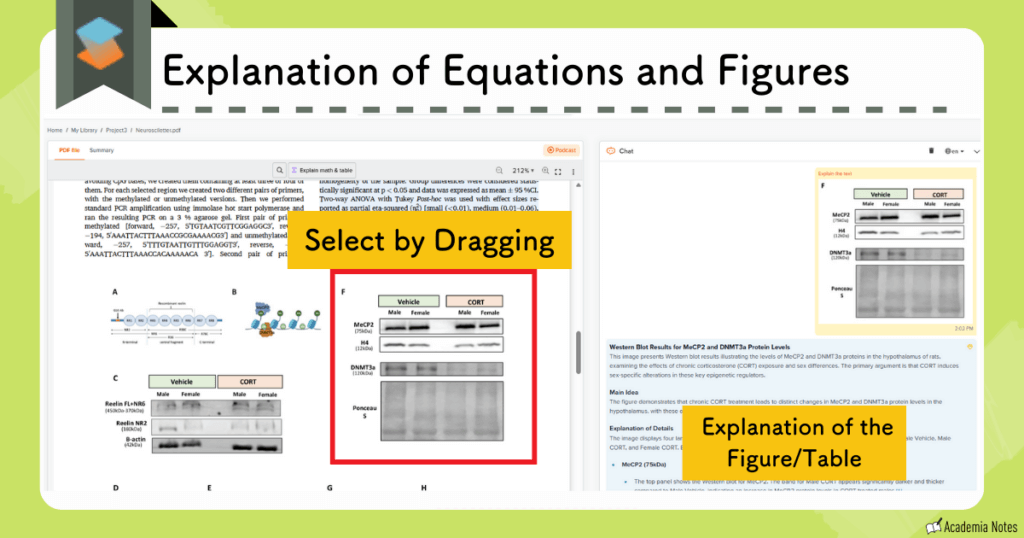
In addition to these features, the platform includes a wide array of practical tools, making it a highly specialized AI solution tailored to the needs of researchers.
Check out SciSpace’s features and pricing in detail here:
Official Website: SciSpace(https://typeset.io/)
User Guide: Learn more about SciSpace
User Guide: Learn more about Deep Review
Consensus (Literature Search)

Key Features of Consensus
- Conducts high-precision literature searches across a wide range of topics
- Offers the Deep Search feature to organize prior research in a data-centered way
- Allows you to quickly grasp research findings at a glance with the Consensus Meter
(Deep Search can be used up to three times per month on the Free Plan)
A paid subscription is required if:
- You want to remove usage limits on individual features
- Pro Plan: from US$10 per month
- Deep Plan: from US$45 per month
※Students are eligible for a 40% discount!
Consensus is an AI-powered literature search tool that excels at data extraction and analysis.
For research questions that can be answered with a ‘yes’ or ‘no,’ Consensus displays a Consensus Meter like the one below.
The Consensus Meter summarizes how prior studies align with each position—Yes, No, or Possibly—and presents the distribution as percentages. This allows you to quickly assess the overall direction of the evidence for your research question:

The Consensus Meter allows you to grasp the prevailing view in the literature at a glance.
What’s more, even if you use Consensus only occasionally, you can still access high-quality literature search capabilities with the Free Plan.
For more details:
Official Website: Consensus(https://consensus.app/search/)
User Guide: Find Scientific Evidence Fast: 3 Powerful Search Tools & Pricing of Consensus AI
Summary of Elicit
Key Features of Elicit
- Highly accurate and comprehensive literature searches (especially useful when exploring a new field or preparing a review article).
- When conducting a systematic review, it allows for detailed control over the screening process, enabling the generation of a highly rigorous and precise review.
- For citations included in the generated review, you can verify the exact passages within each source paper.
When a paid upgrade becomes necessary:
- When you want to use the Systematic Review feature
- When you need more detailed information displayed in the search results
- When you’re looking for even higher-precision outputs
- When you want to increase the number of papers included in data extraction
- Plus Plan: from US$10 per month
- Pro Plan: from US$42 per month
By leveraging AI effectively with Elicit, you can significantly enhance the efficiency of your research workflow.
Give the Free Plan a try!
Official Website: Elicit (https://elicit.com/)