
Supercharge Your Research: 7 Game-Changing AI Tools for 2026<span class="wtr-time-wrap after-title"><span class="wtr-time-number">38</span> min read</span>
In this post, I’ll walk you through seven AI tools that can dramatically streamline your research workflow.
Today, an extensive array of AI tools specifically tailored for researchers are available.
- Literature searches are faster and more accurate
- Relevant papers are not overlooked
- Reading speed increases and comprehension is enhanced

Here are the 7 tools I will be introducing:
Click to jump to the tool that interests you.



SciSpace
In my experience, SciSpace stands out as the definitive all-in-one platform for researchers—one that I rely on heavily in my own work.

I am a heavy user myself. SciSpace is packed with features covering everything from literature search to reading comprehension.
Here are four reasons why I recommend SciSpace as the go-to AI tool for researchers:
- Literature search, reading tools, and AI agents on a single platform
- In-depth literature search and summarization with Deep Review
- Reading support that helps you understand complex papers via asking questions
- Automatic data extraction and organization of papers into tables for comparison and analysis.
All-in-One AI Tool for Researchers: Search, Read & Agents
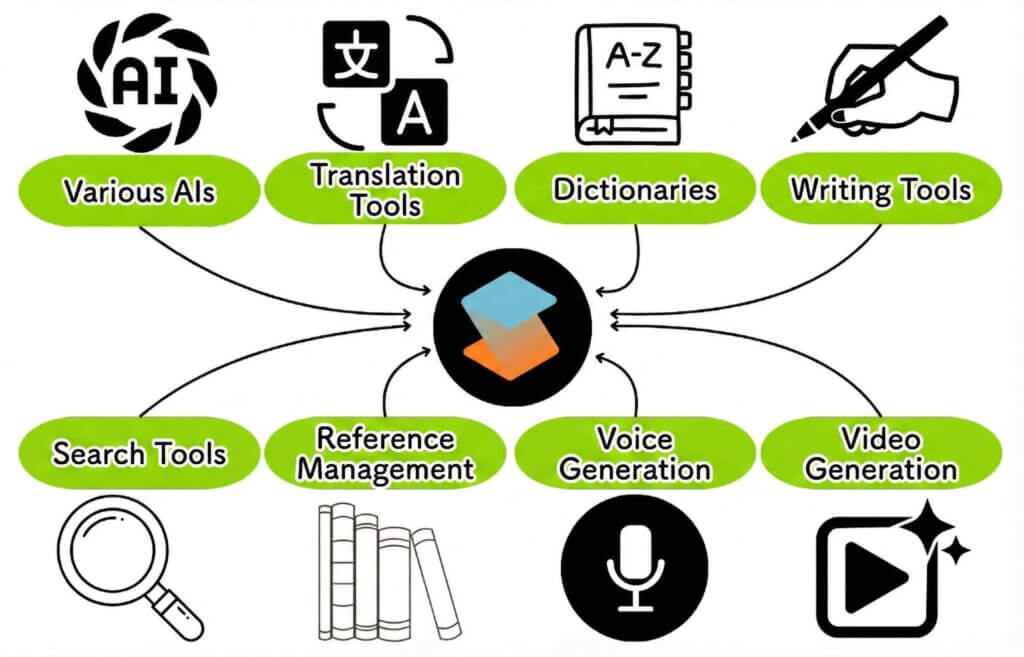
SciSpace is constantly evolving; notably, it introduced the Deep Review search feature in February 2025, followed by advanced AI agent capabilities in July 2025.

As a pioneer in research AI, SciSpace comes equipped with everything a researcher needs.
In-Depth Search & Summary with Deep Review
Literature search accuracy has reached new heights with the debut of Deep Review.
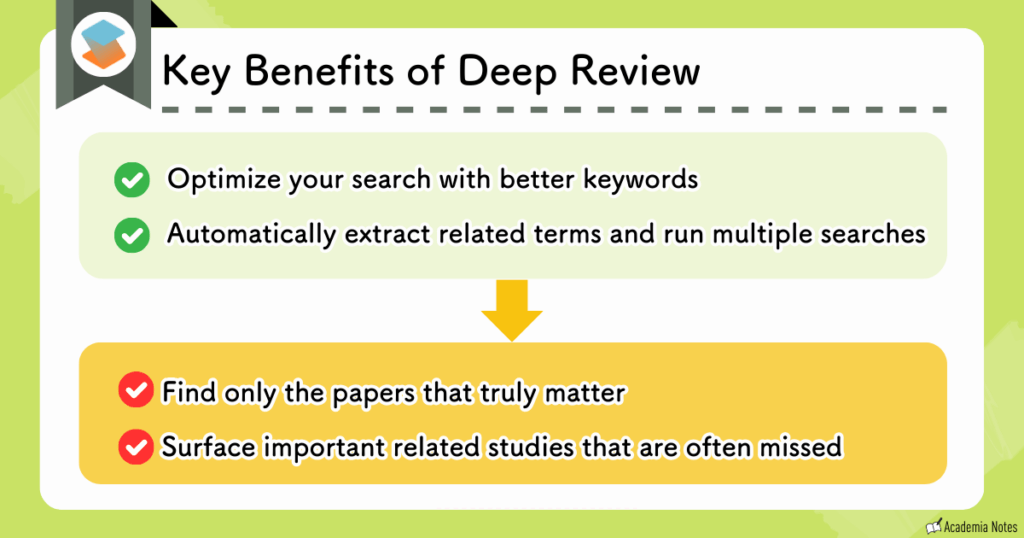
Here is what happens behind the scenes:
Deep Review refines your search query through an intuitive, conversational interface with the AI.
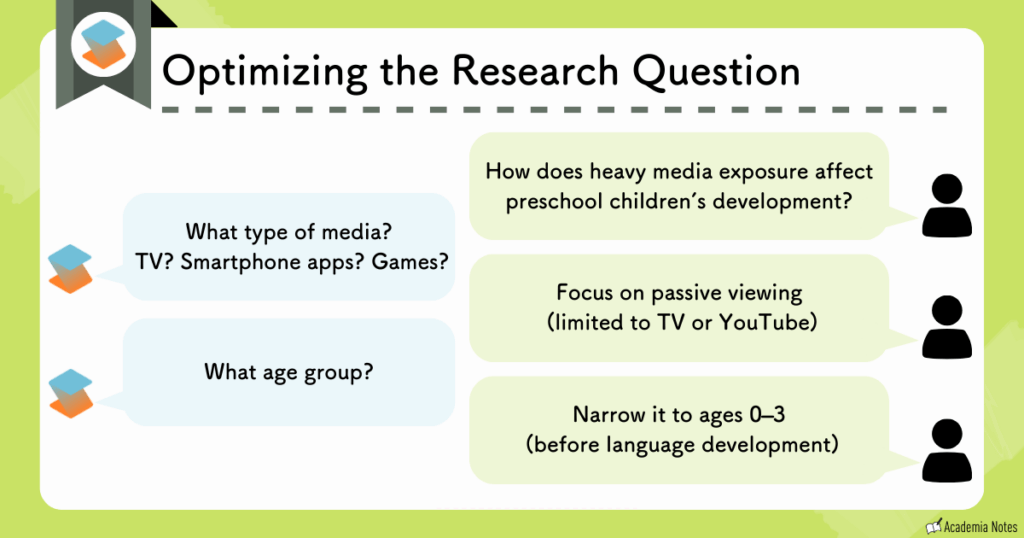
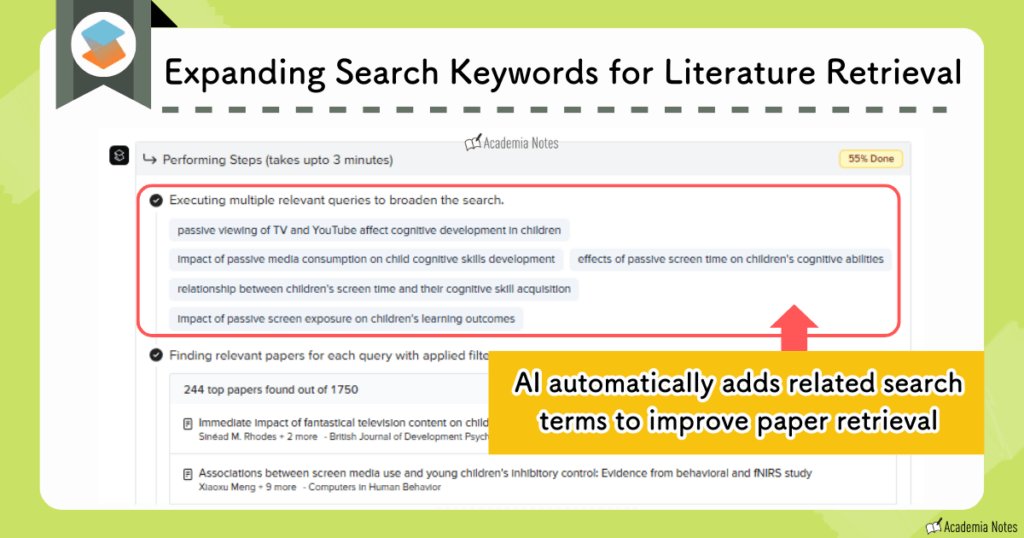
The AI automatically extracts related keywords and runs multiple searches in the background.

No complex prompting is required; the interface is entirely intuitive.
Through this process, Deep Review generates a highly accurate literature review for you.
- Extremely comprehensive coverage
- Highly accurate citations
- Complete summaries covering everything from the introduction to the conclusion
- High language proficiency
An Example of an Actual Review
I cover the capabilities of Deep Review in greater detail in a dedicated article:
Interactive Q&A for Complex Papers
SciSpace‘s reading support is one of its most useful features. While reading, you can clarify questions instantly using the chat interface located on the right side of the screen.
For example, you can ask:
- “What are the new findings in this paper?”
- “What does [Term] mean?”
- “Are there other references for this?”
- (Select text) “Explain this section.”

Resolve questions immediately as they arise, allowing you to continue reading without breaking your concentration.
If you come across a section you don’t understand, simply highlight the text to get an instant summary or translation:
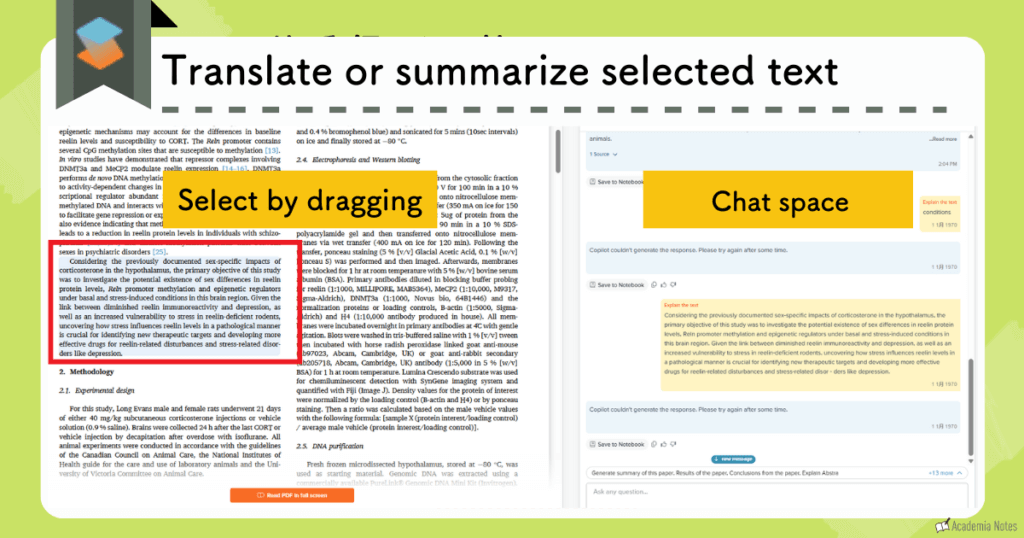
SciSpace can even provide rapid explanations for complex equations and charts:
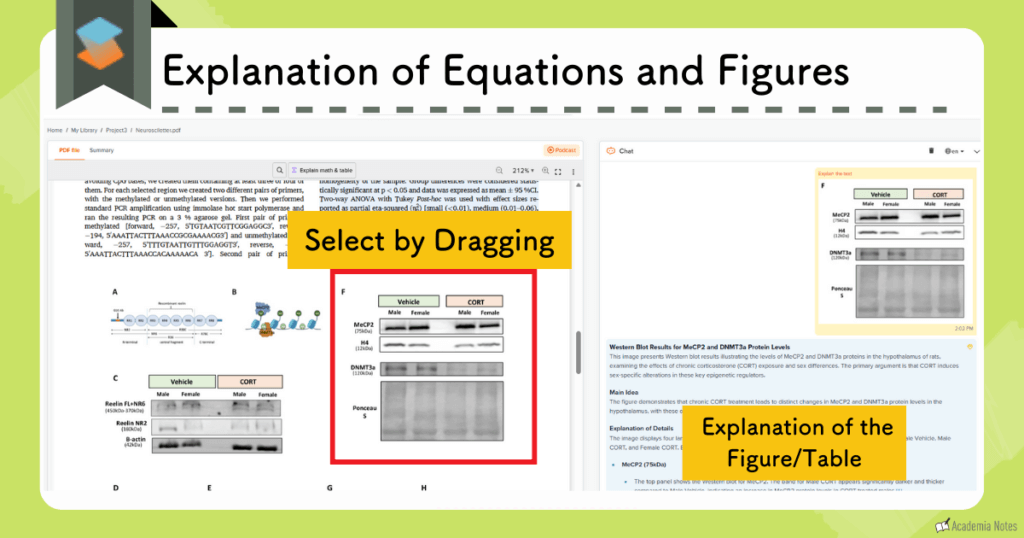
SciSpace can significantly increase your reading speed.
Data Extraction & Comparative Tables
Extracting specific data points like “Results” or “Methods” from papers into a table makes comparing related literature effortless:
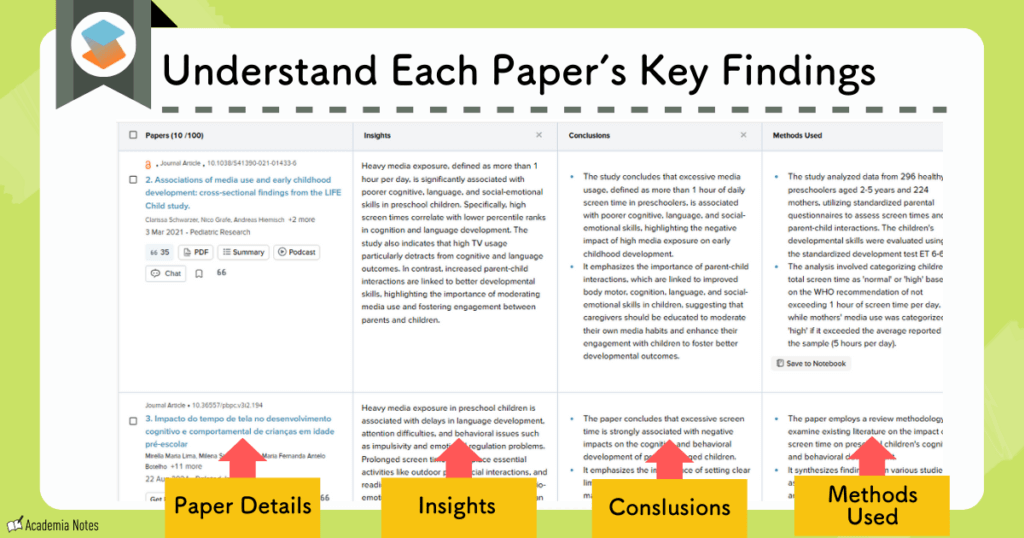

I previously handled this by manually creating Excel sheets to organize my findings—a task that is now fully automated with SciSpace.
SciSpace is also packed with these additional features:
- AI Writer (Writing Support)
- Paraphraser
- Automatic generation of intro videos and slides from PDFs
- AI Detector
The primary advantage of SciSpace is that it consolidates every essential research tool into a single, unified platform.
SciSpace Pricing Plans
SciSpace offers three plans:
- Free Plan
- Premium Plan (US$7.20/month with promo code)
- Advanced Plan (US$42/month with promo code)
Simple Pricing Comparison
| Free Plan | Premium Plan | Advanced Plan | |
|---|---|---|---|
| Price | – | From $7.20/month | From $42/month |
| Literature Search | △ Basic/Limited | ○ High Quality/Unlimited | |
| Reading Support | △ Basic/Limited | 〇 High Quality/Unlimited | |
| AI Writer | △ Basic/Limited | ○ High Quality/Unlimited | |
| Deep Review | Not available | ○ Unlimited | |
Paid Plan Pricing
You have the option to choose between an annual plan or a monthly plan.
However, the annual subscription is significantly more cost-effective:
| Billing Cycle | Monthly Cost (Regular → Discounted) | Promo Code | |
|---|---|---|---|
| Premium Plan | Annual | $12/month → $7.20/month |
ATSAID40
40% OFF |
| Monthly | $20/month → $16/month |
ATSAID20
20% OFF | |
| Advanced Plan | Annual | $70/month → $42/month |
ATSAID40
40% OFF |
| Monthly | $90/month →$72/month |
ATSAID20
20% OFF |
Important Note: The promo codes are valid only for first-time paid subscriptions. For example, you cannot use these codes when upgrading from the Premium Plan to the Advanced Plan.
Accepted payment methods include credit cards and Google Pay.
For more details:
Official Website:SciSpace (https://typeset.io/)
User Guide:Learn more about SciSpace, Learn more about SciSpace Deep Review
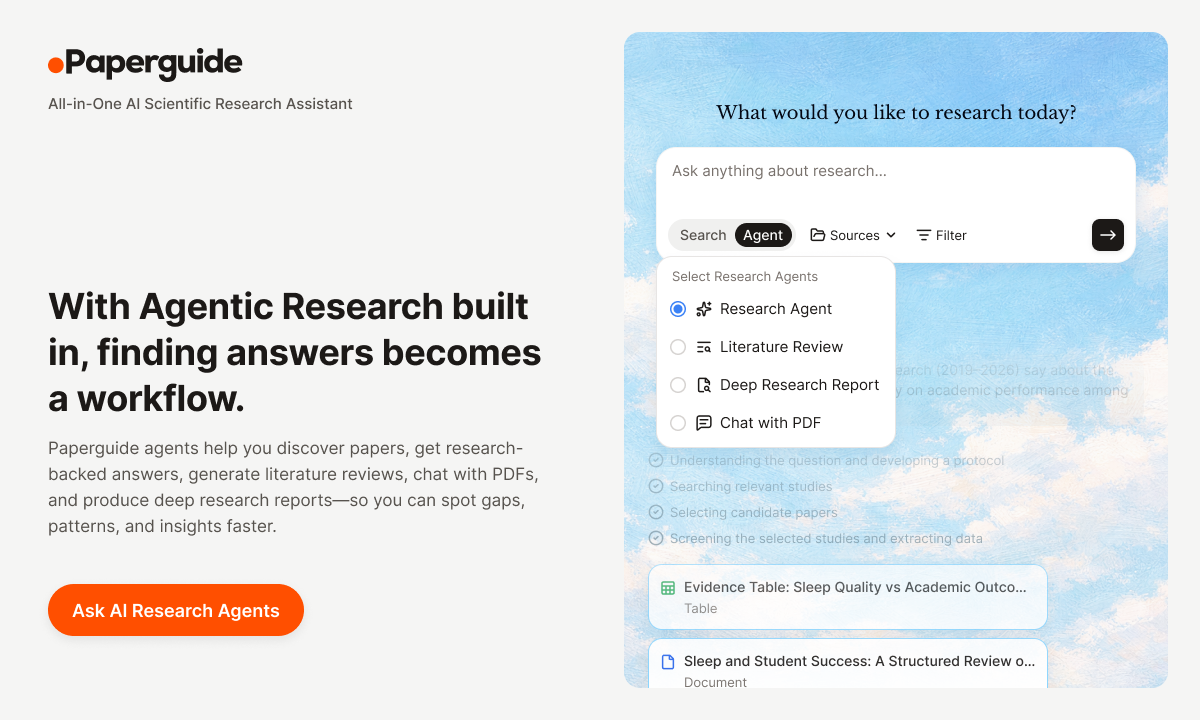
Paperguide

Paperguide is a tool that has recently been gaining traction among researchers in the market. It offers functionality comparable to SciSpace but at a significantly lower price.
With the launch of Deep Research in June 2025, its performance has been further enhanced.
Its strong focus on the AI Writer feature also serves as a key differentiator from SciSpace.
- High-precision literature search via Deep Research
- Includes an AI Writer capable of generating natural text with an appropriate, academic tone
- Features such as literature search, summarization, reading comprehension, and drafting make it an all-in-one research tool
High-Precision Search with Deep Research
Paperguide encompasses not only writing features but also comprehensive support for literature search and reading comprehension.
The user experience is strikingly similar to SciSpace.
Paperguide offers three literature search modes:
| AI Search | Literature Review | Deep Research |
|---|---|---|
| For when you want a general overview | For when you want to retrieve specific papers | For when you need to discover papers and generate a detailed review based on them |
Paperguide’s Deep Research feature is particularly notable.
Deep Research optimizes keywords via chat (similar to the workflow in SciSpace):
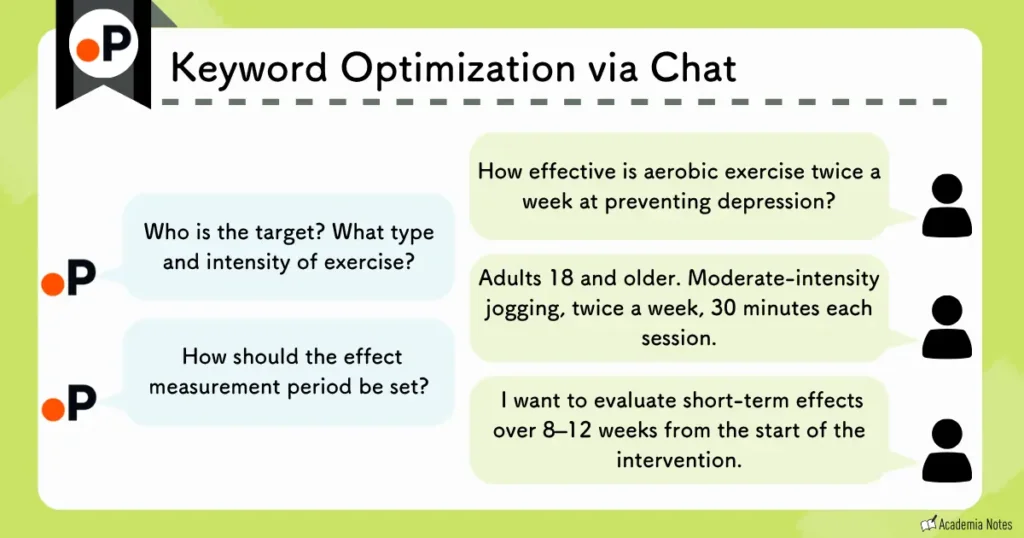
Following the chat interaction, the research question is significantly refined:
| Before | After(generated by AI via chat) |
|---|---|
| How effective is twice-weekly aerobic exercise for preventing depression? | In general adults aged 18 and older, how effective is moderate jogging performed twice a week (30 minutes per session) for preventing depression based on self-reported depressive symptom scores (e.g., PHQ-9)? (Focusing on randomized controlled trials, while also considering observational studies.) |
Furthermore, the Controlled Deep Research mode allows users to manually add, modify, or delete items such as:
- Sub-questions (questions designed to broaden the search scope)
- Paper screening criteria
- Selected papers
This allows for significant user intervention in the literature review creation process and effectively rivals the features offered in the top-tier paid plan from Elicit.
A detailed review is then generated:
For other search functionalities, consider the following applications.
Use AI Search when you wish to obtain an overview regarding your research question:
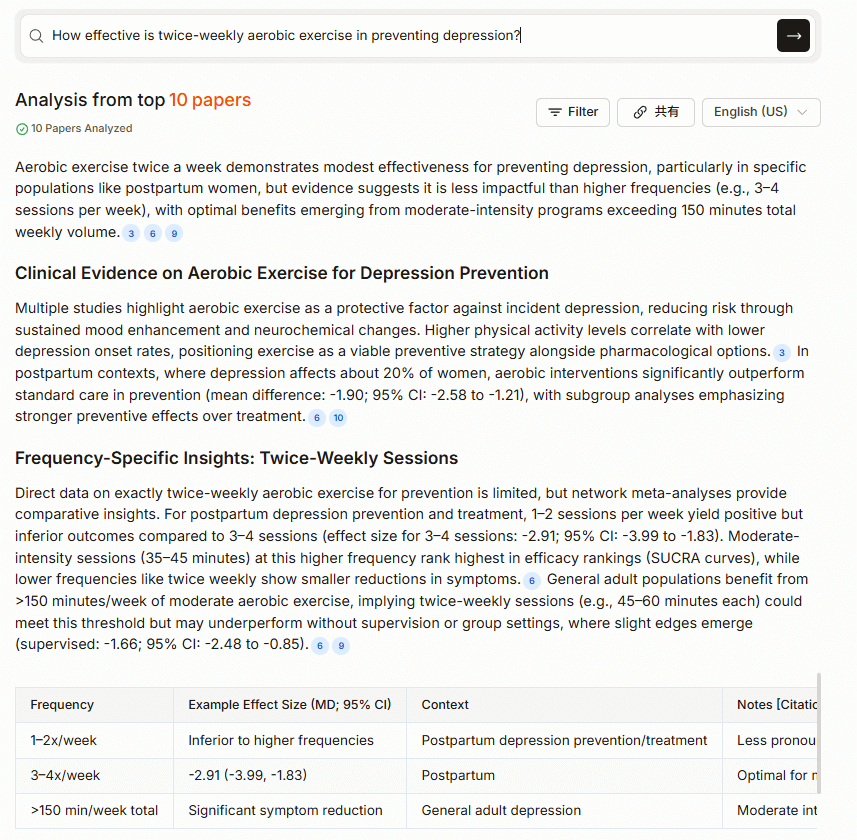
Use Literature Review when you seek to identify papers relevant to your research question:
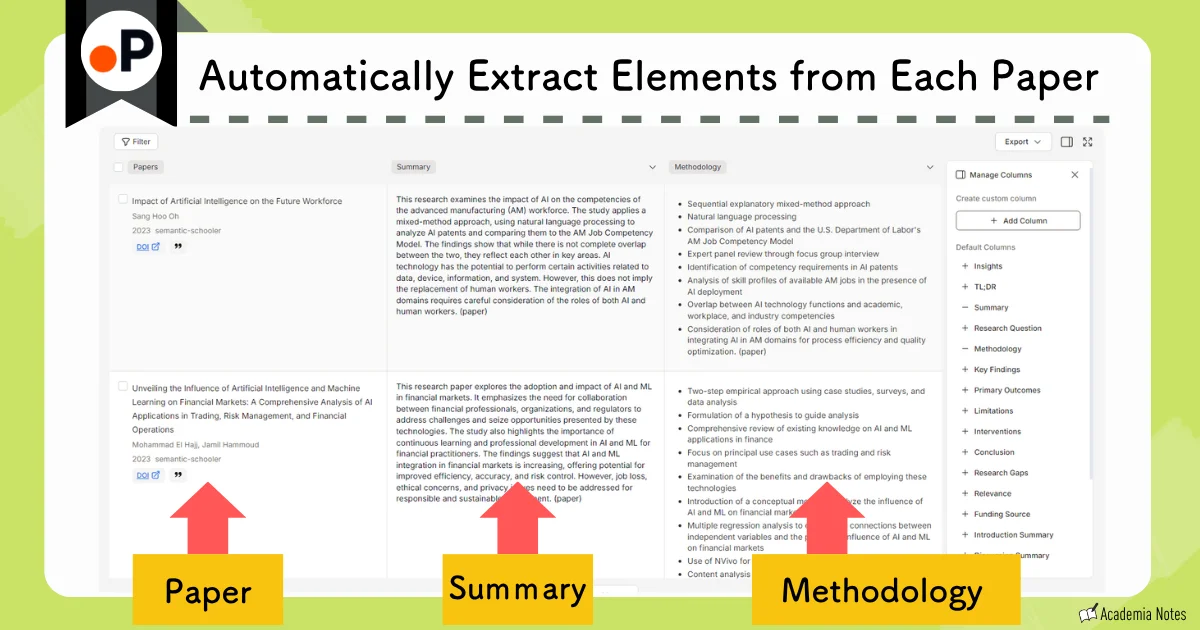

You can select the appropriate tool based on your specific requirements.
AI Writing Assistant for Academic Tone
By entering a prompt, the tool automatically generates headings:
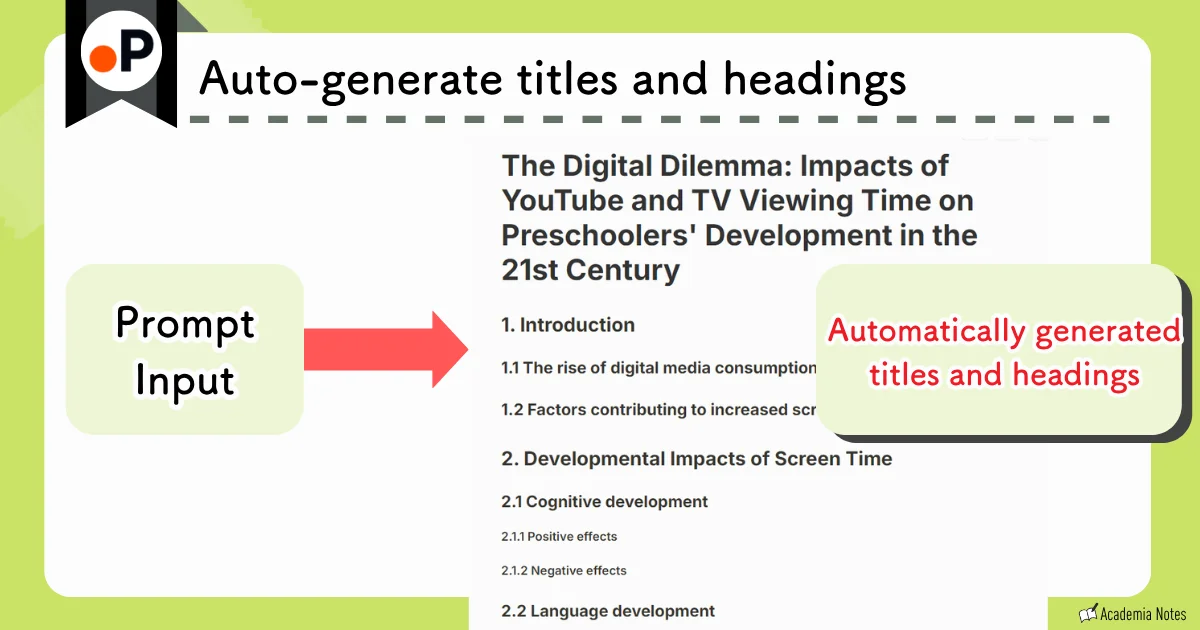
From here, you can review and refine the direction of the headings, and once finalized, proceed to the body text.
It is crucial to firmly establish the direction of the paper at the outline stage.
Subsequently, you can accelerate your writing process using AI as follows:
- Automatically generate titles and structures
- Automatically draft content for each heading
- Perform grammar checks and paraphrase
- Insert citations with a single click
- Conduct plagiarism checks
In many cases, this substantially speeds up the writing process.
A Comprehensive Tool: From Searching to Writing
You can extract necessary information with a single click while viewing articles side-by-side:
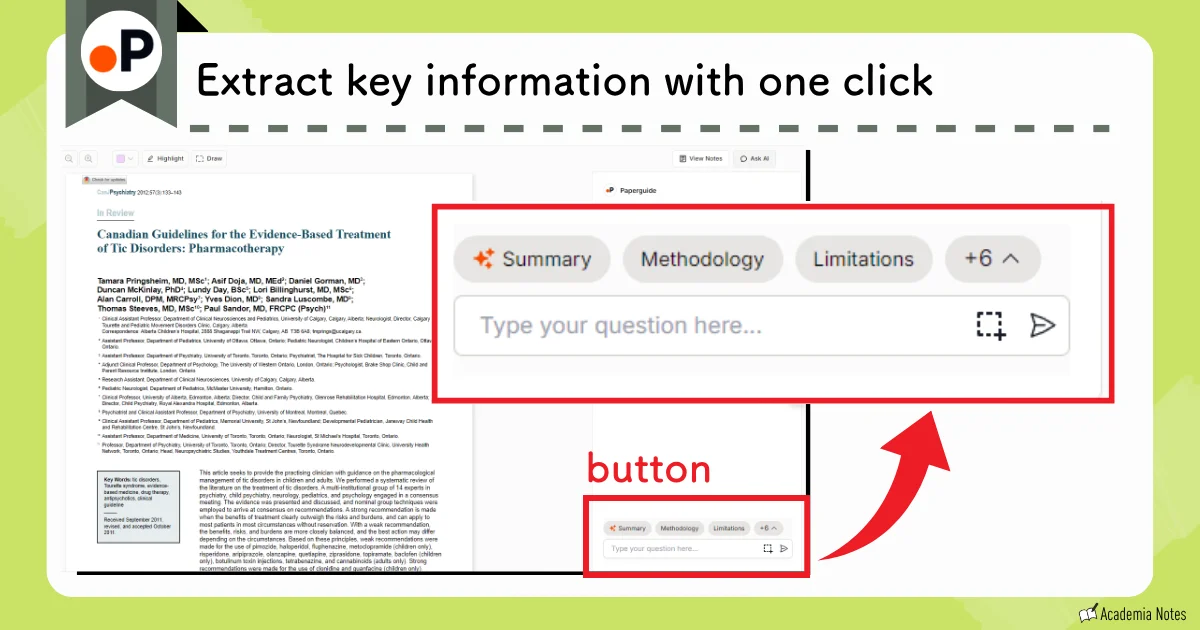
The tool also provides explanations for figures, tables, and unfamiliar terminology:
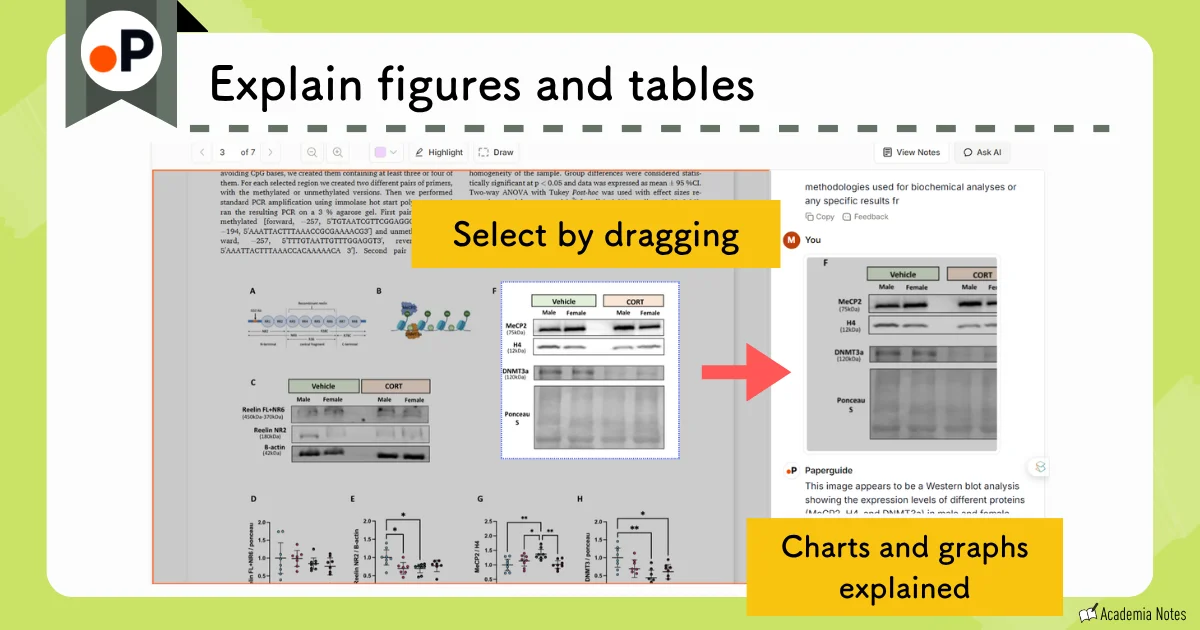
Although Paperguide is still relatively new and less well-known, I consider it an excellent, all-in-one research tool, and its pricing is competitive relative to similar services.
Paperguide Pricing Plans
Paperguide offers three pricing plans:
- Free Plan
- Plus Plan (from US$9.60/month)
- Pro Plan (from US$19.20/month)
Plan Comparison
There is no disparity in AI quality between Paperguide’s Free Plan and its paid plans.
However, the Free Plan imposes usage limits.
I recommend upgrading to a paid plan as your usage frequency increases.
Simple Pricing Plan Comparison
| Free Plan | Plus Plan | Pro Plan | |
|---|---|---|---|
| Price | – | From $9.60/month | From $19.20/month |
| AI Output Limit | △ Up to 5 times/month | ○ Unlimited | |
| Deep Research Usage | △ Up to 2 times/month | 〇 Up to 10 times/month | ◎ Up to 50 times/month |
It’s a significant advantage to be able to evaluate performance equivalent to paid plans within the Free Plan.
Should you find yourself wishing to use the tool more extensively, I recommend starting with the Plus Plan.
Paid Plan Pricing
| Plan | Billing Cycle | Monthly Price (Regular → Discounted) | Promo Code |
|---|---|---|---|
| Plus Plan | Annual | $12/month → $9.6/month | ACADEMIA20 (20%OFF) |
| Monthly | $19/month → $15.2/month | ||
| Pro Plan | Annual | $24/month → $19.2/month | |
| Monthly | $39/month →$31.2/month |
Students are eligible for a student discount of 40% OFF (please note that this cannot be combined with other coupons).
With continuous feature updates, Paperguide stands out as a highly cost-effective tool. Consequently, its market share is rapidly expanding.
For more details:
Official Website:Paperguide (https://paperguide.ai/)
Coupon Code (20% OFF, annual and monthly): ACADEMIA20
User Guide:Learn more about Paperguide
Elicit

Elicit‘s search precision has been further enhanced by a recent update.

Originally known for its comprehensive search capabilities, Elicit has been significantly strengthened by the update to its “Systematic Review” feature.
- It’s one of the few AI tools capable of automatically generating systematic reviews
- In response to questions, it provides high-precision search results backed by evidence from academic papers
Automated Systematic Reviews
In short, Elicit‘s Systematic Review feature fully automates the major steps of a systematic review while still allowing human adjustment at each stage.
Beyond merely collecting papers, Elicit automatically extracts and organizes the following data into a table:
- Study design
- Sample size
- Intervention
- Outcomes
- Effect sizes
Tasks that typically take researchers several days can now be completed in a matter of minutes.
A key advantage of Elicit’s Systematic Review is that users retain the ability to refine the results manually.
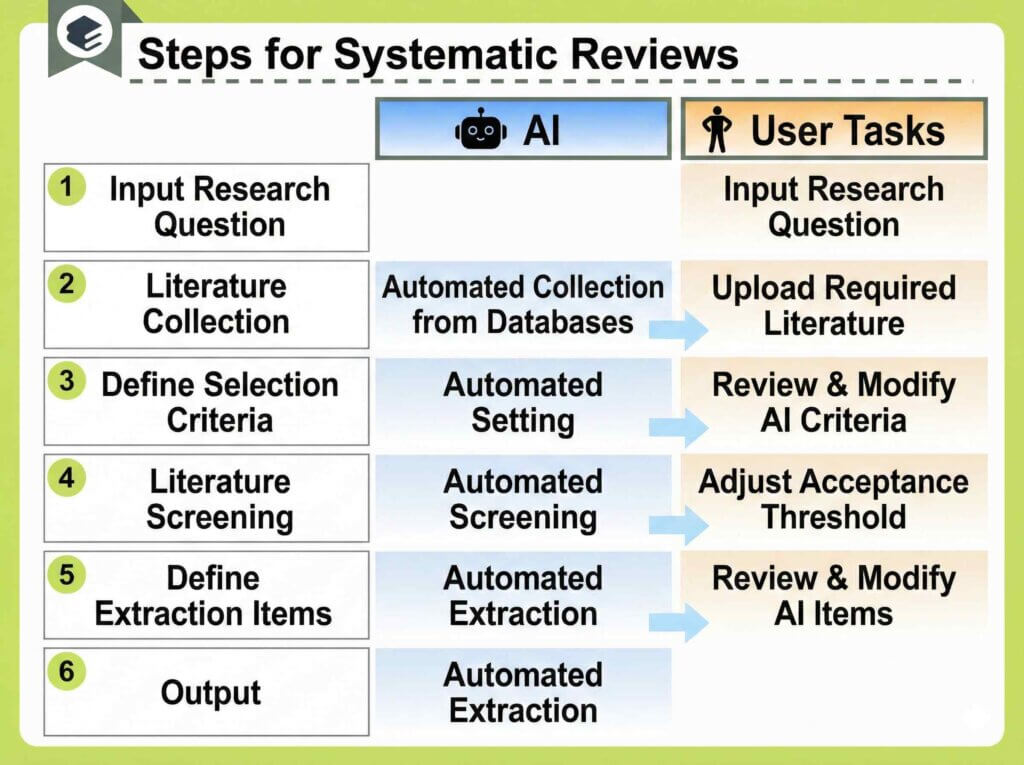
Let’s look at the type of report you can generate:
Example of an Actual Report
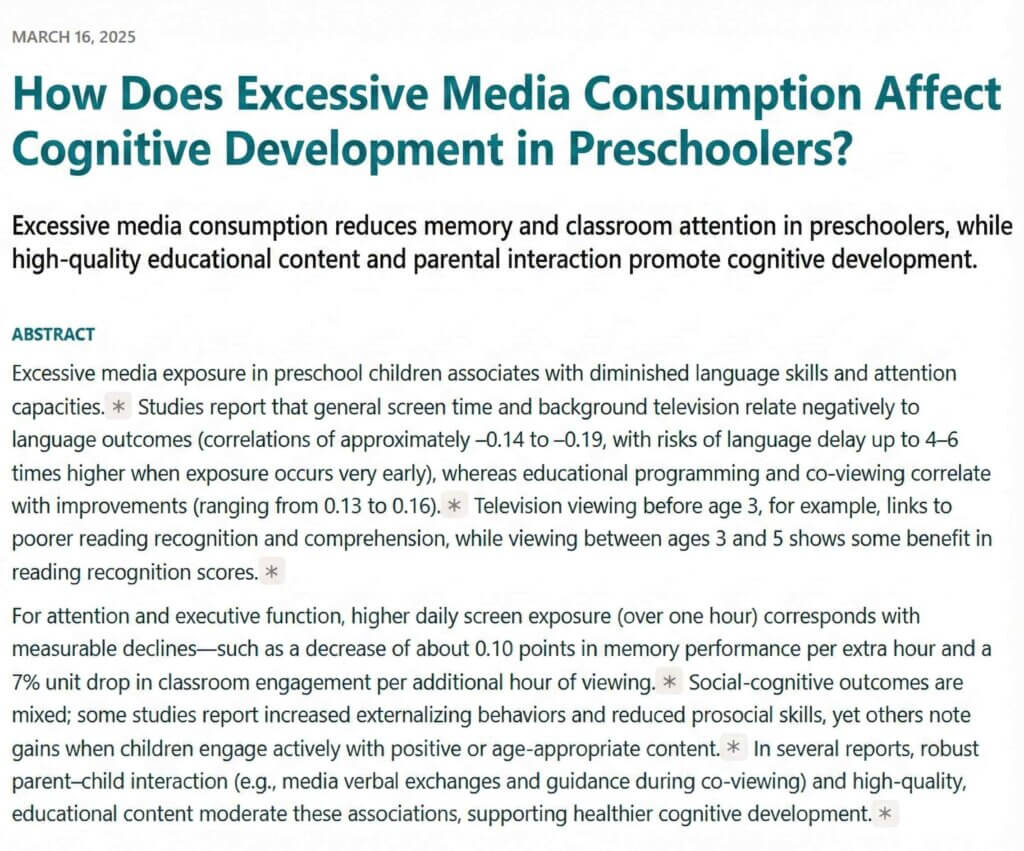
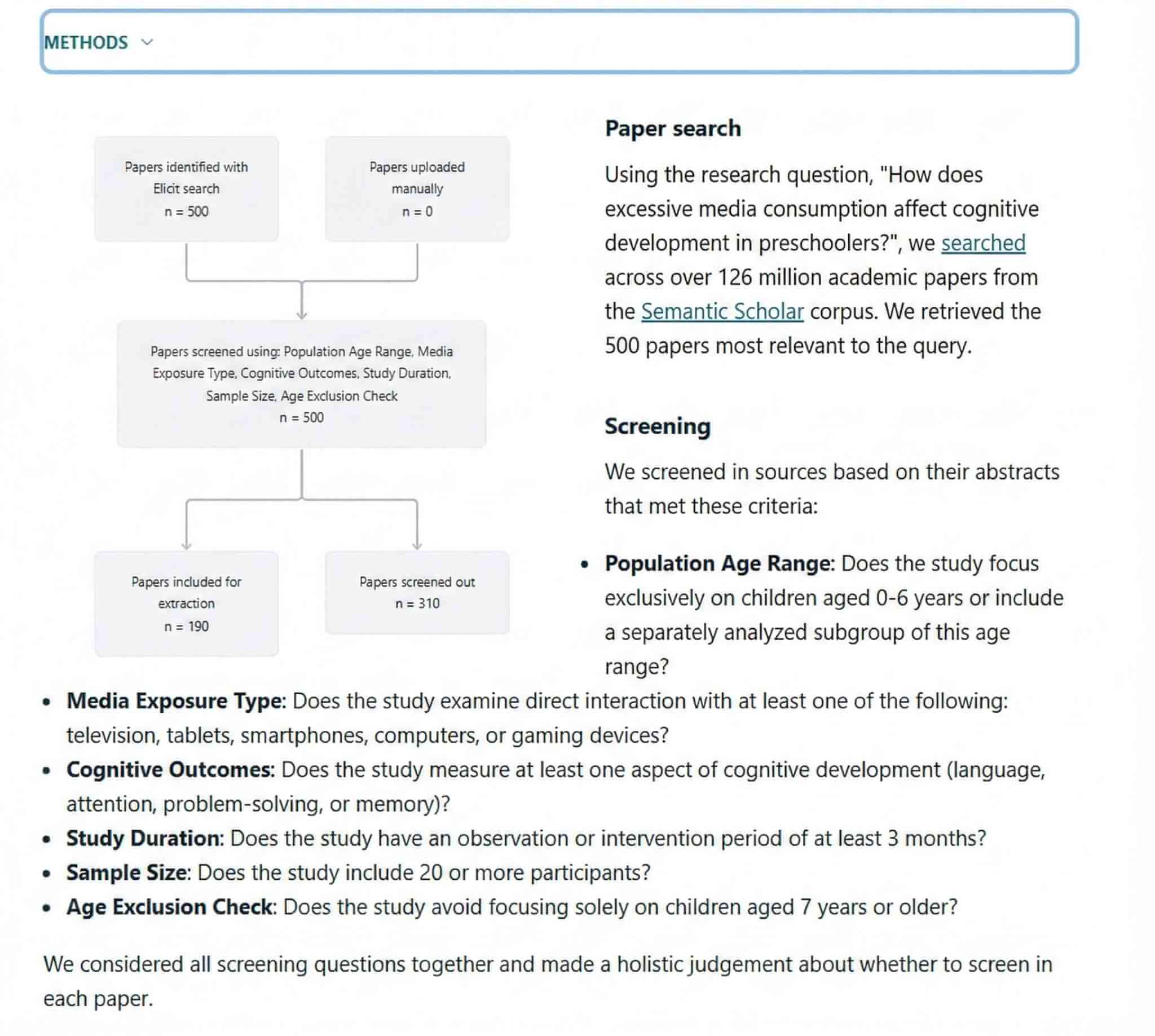
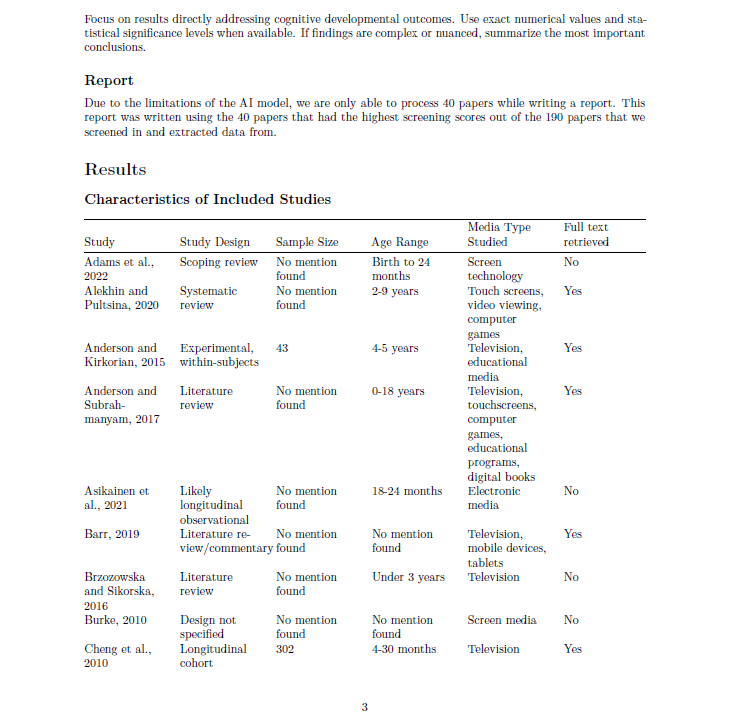
A review article based on a reliable methodology is generated instantly.
To be honest, Elicit’s performance far exceeded my expectations.
While the Systematic Review feature is limited to the Pro Plan, this feature encapsulates the full potential of Elicit.
Evidence-Based Answers with Citations
Elicit facilitates highly precise academic literature searches.
- Access to a database of over 200 million research papers
- Summaries are accompanied by citations
- Extraction of key data points from each paper are available in the search results
- User-friendly search filters
Simply input your research question to query a database of over 125 million papers.
The tool initially presents a synthesized summary:
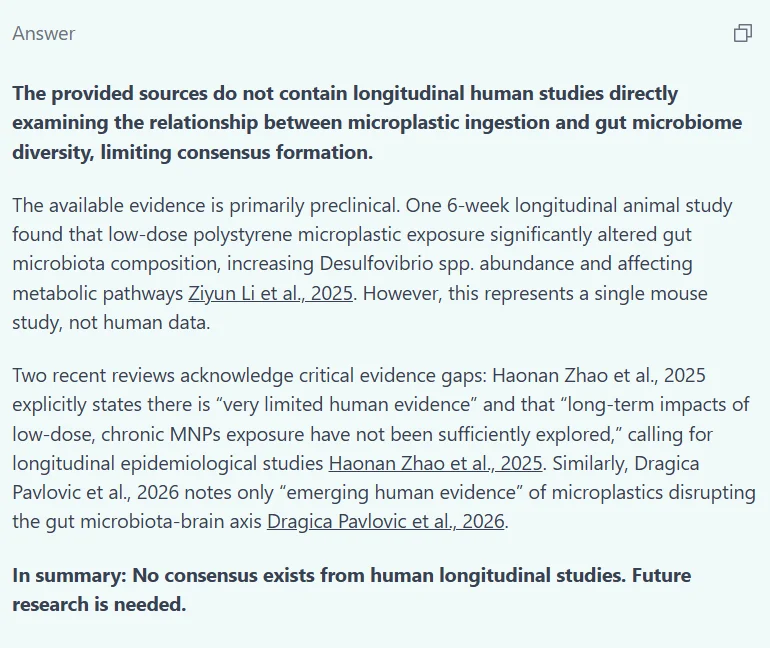
Below the summary, you will find a list of papers displayed in a table view:
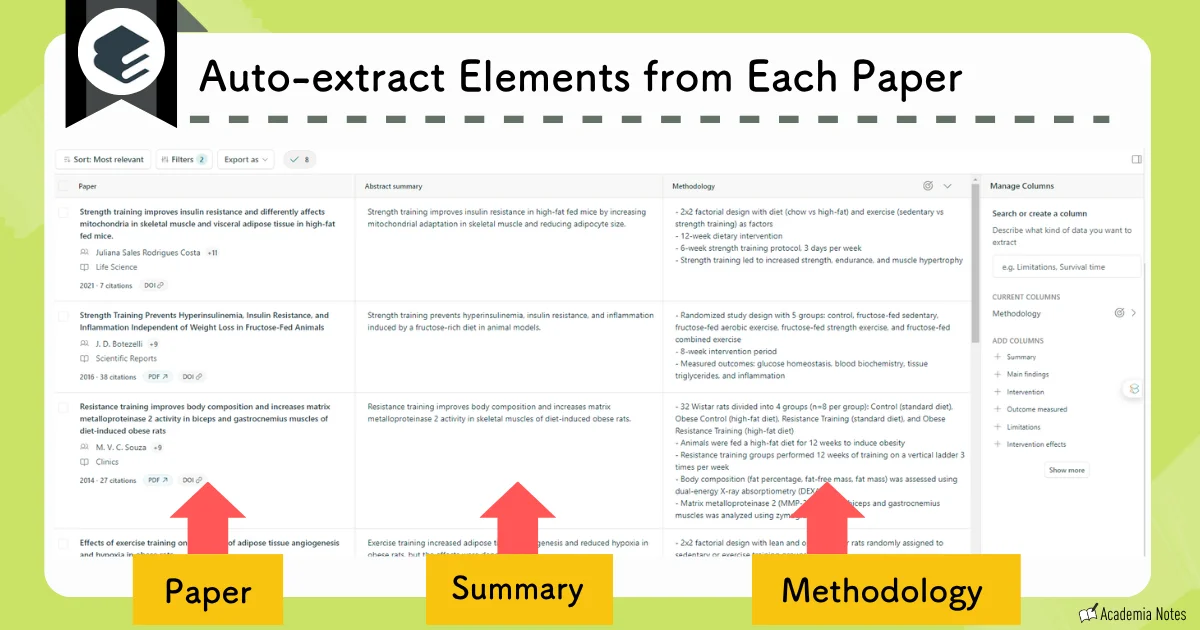
The most remarkable feature? By clicking the citation, you can view the specific snippets and the context within the paper that support the answer.
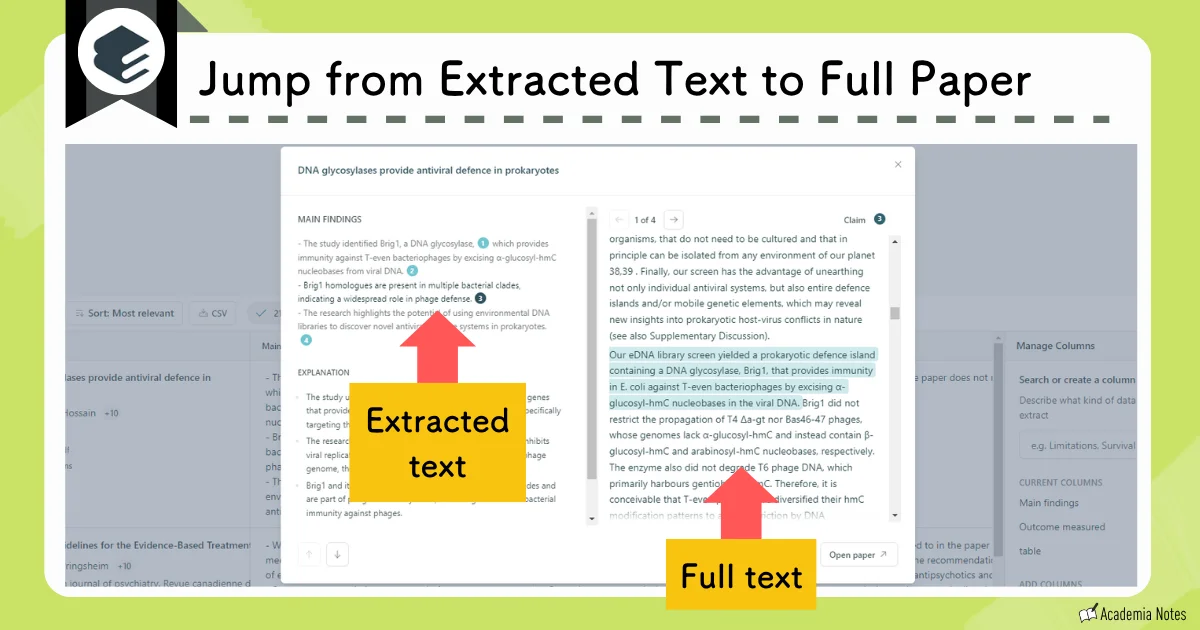
This is truly impressive!
Elicit Pricing Plans
Elicit offers three pricing tiers:
- Free Plan
- Plus Plan (starting at US$9/month)
- Pro Plan (starting at US$41.60/month)
Pricing Tiers Comparison
- The Plus Plan is suitable for routine research activities
- Upgrade to the Pro Plan when conducting literature reviews or systematic reviews
The Free Plan offers unlimited search capabilities, and data extraction from papers is also available.
| Free Plan | Plus Plan | Pro Plan | |
| Literature Search | Unlimited | Unlimited | Unlimited |
| Systematic Reviews | |||
| Data Extraction Limit | Up to 20/month | Up to 50/month | Up to 200/month |
| Available Columns in Tables | Up to 2 columns | Up to 5 columns | Up to 20 columns |
| High-Precision Mode | Up to 1 column per table | Unlimited | |
| Chat with Papers | 4 papers at once (Unlimited) | 8 papers at once (Unlimited) | 8 papers at once (Unlimited) |
| CSV/BIB/RIS Export |
Since this table alone may be insufficient, please refer to the detailed article on Elicit for further information.
Paid Plan Pricing
| \Recommended/ Annual Subscription | Monthly Subscription | |
|---|---|---|
| Plus Plan | $10/month ($120/year) | $12/month |
| Pro Plan | $46.10/month ($499/year) | $49/month |
Previously, continuous use of Elicit was not possible without subscribing to a paid plan.
However, the pricing structure has recently been revised, allowing for limited use even on the Free Plan.
I recommend the Plus Plan if you wish to conduct more precise and accurate searches.
Furthermore, the Pro Plan is required if you intend to conduct systematic reviews.
For more details:
Official Website:Elicit (https://elicit.com/)
User Guide: Learn more about Elicit
Consensus

Since Consensus exclusively sources peer-reviewed papers, it’s highly effective for high-precision literature searches (similar to Elicit).
- Offers high-precision literature searches that draw on only scientific evidence
- Visualizes the level of agreement by aggregating affirmative and negative findings (“Consensus Meter”)
Extract Purely Scientific Evidence
Consensus explicitly outlines the recommended search methodologies as follows:
- Ask questions regarding the relationship between concepts
(e.g., “Does creatine improve cognition?”) - Ask questions answerable with a “Yes” or “No”
(e.g., “Can zinc supplements treat depression?”) - Ask questions concerning the effects of a specific phenomenon
(e.g., “What are the economic impacts of immigration?”)
You can utilize Consensus most effectively by formulating questions rather than simply listing keywords.
A defining feature of the Consensus search results interface is its readability, which is enhanced by clear labeling:
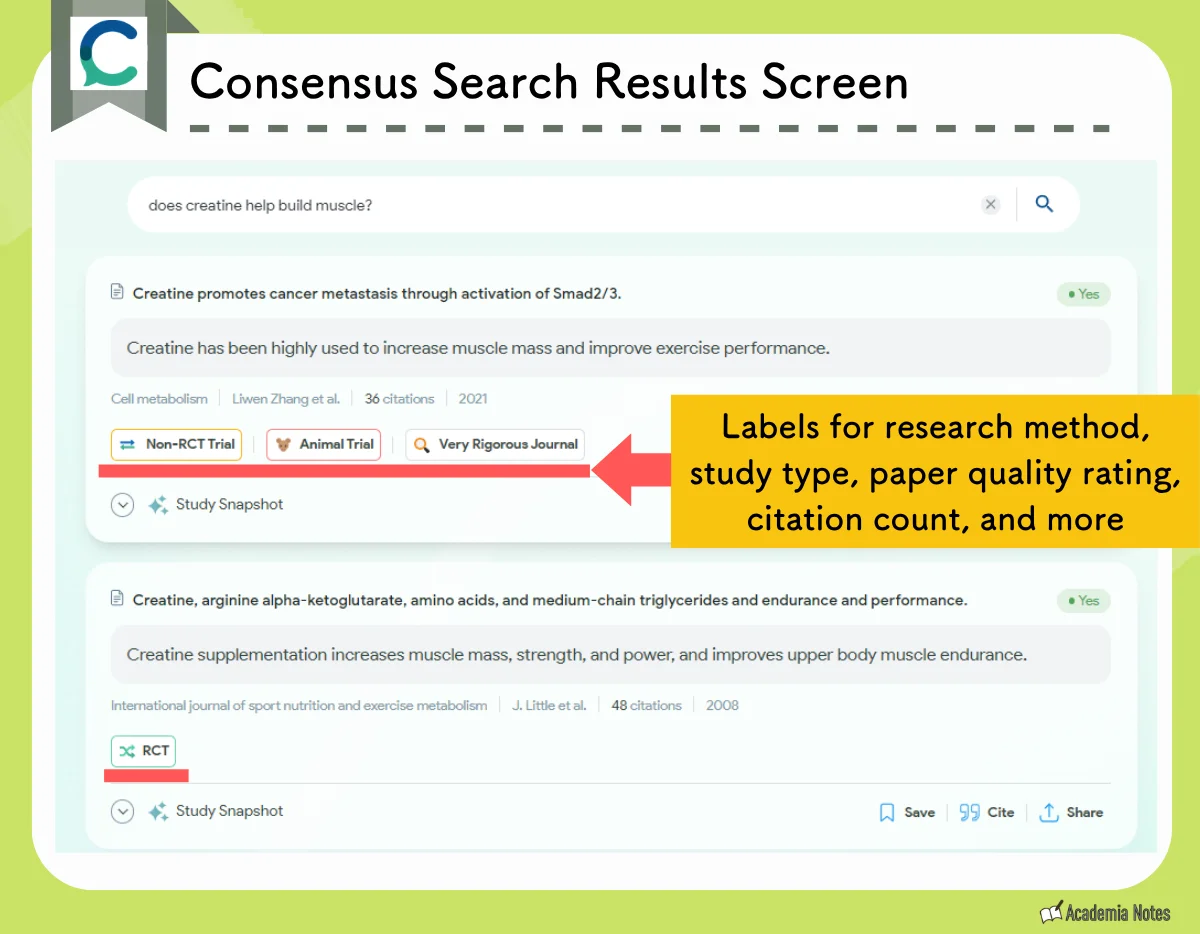
The labels include the following categories:
- Study Assessment: “Rigorous Journal,” “Very Rigorous Journal”
- Citation Metrics: “Highly Cited”
- Study Design: “RCT,” “Non-RCT Trial,” “Case Report,” etc.
- Clinical or Pre-clinical classification: “Animal Trial,” etc.
Visualize Agreement with the Consensus Meter
A defining feature of Consensus is its result aggregation function, the Consensus Meter.
When you input a question answerable with a “Yes” or a “No,” the tool analyzes the perspectives found in previous studies:
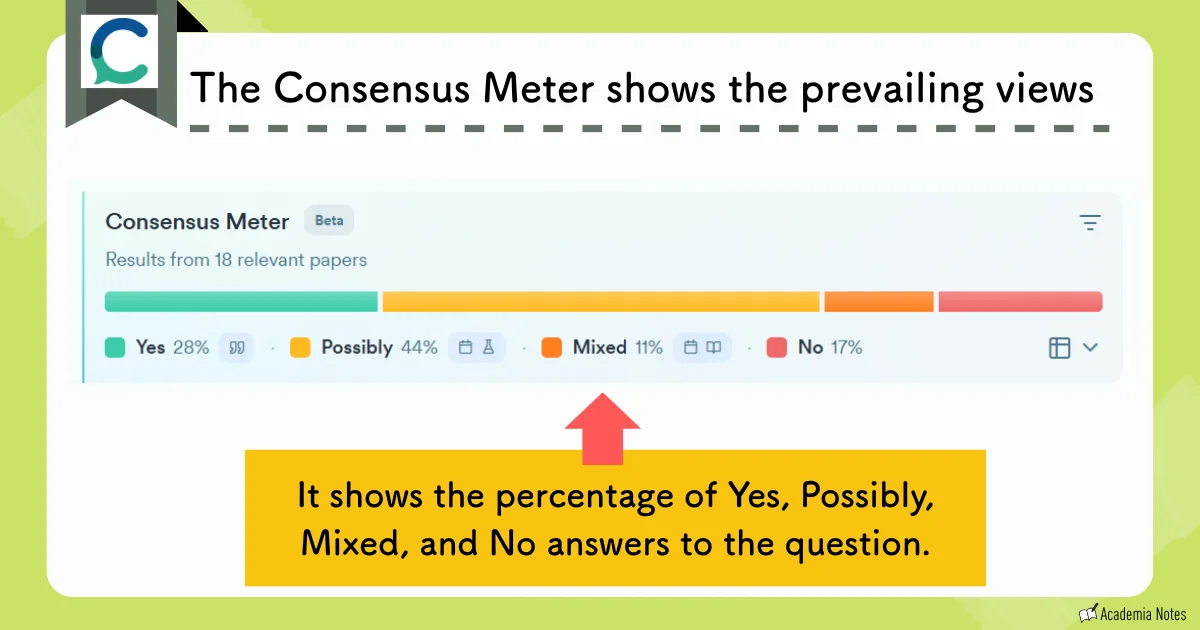
The Consensus Meter allows you to instantly grasp the prevailing consensus or dominant view within the field.
You can utilize this feature by toggling Synthesize to “ON” in the top-left corner of the screen.
Please note that the Free Plan places a limit on the number of times this function can be used.
Consensus Pricing Plans
Consensus offers four pricing plans.
- Free Plan
- Pro Plan: Starting from US$10/month
- Deep Plan: Starting from US$45/month
| Free Plan | Pro Plan | Deep Plan | |
|---|---|---|---|
| Annual Fee | – | $120/year | $540/year |
| Monthly Equivalent | – | $10/month | $45/month |
| Basic Quick Search | |||
| Pro Search | Up to 25 times/month | Unlimited | |
| Deep Search | Up to 3 times/month | Up to 15 times/month | Unlimited |
| SnapShot | 10 times/month | Unlimited | |
| Pro Analysis Powered by GPT-4 | 10 times/month | Unlimited | |
| Ask Paper | 10 times/month | Unlimited | |
In summary, a paid plan is highly recommended for routine research activities as subscribing removes various usage limitations.
Students can utilize the service at a significantly reduced rate.
\Students receive a 40% discount on the Pro Plan/
- Simply register using your institutional email address
Alternatively, please follow these steps: - Send an email to student@consensus.app containing the information listed below, and follow the instructions provided:
- Your current Consensus account email address
- Proof of enrollment (student ID card, institutional email address, etc.)
- Expected year of graduation
Official Website:Consensus (https://consensus.app/search/)
User Guide: Learn more about Consensus
Connected Papers
Visualize Research Connections
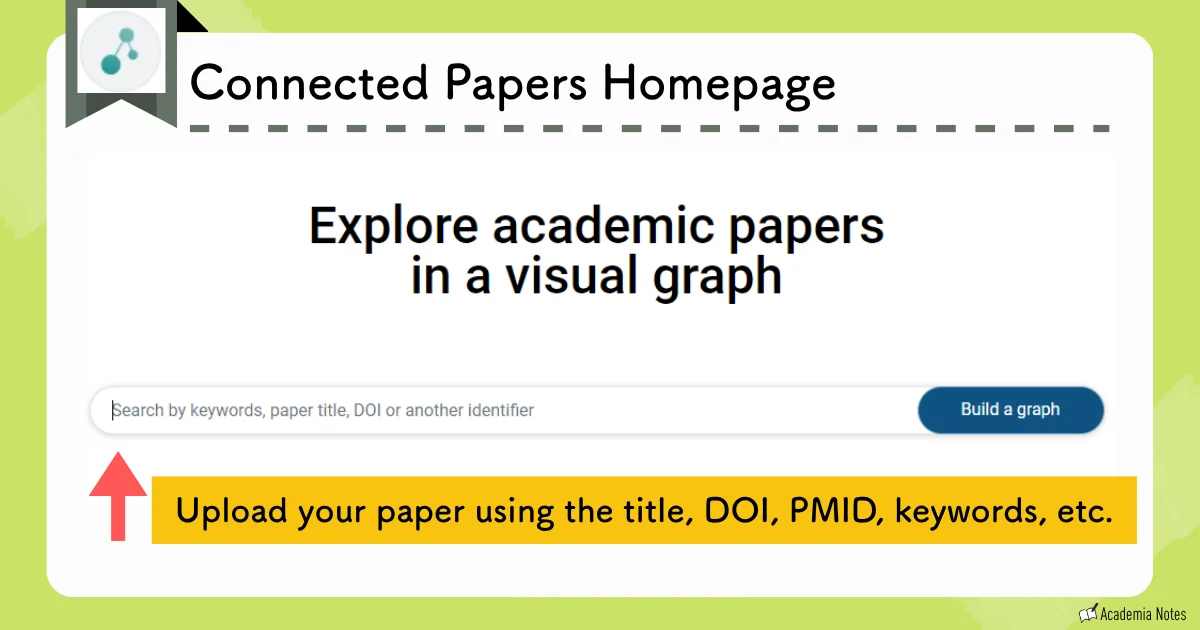
Upload your paper from the homepage:
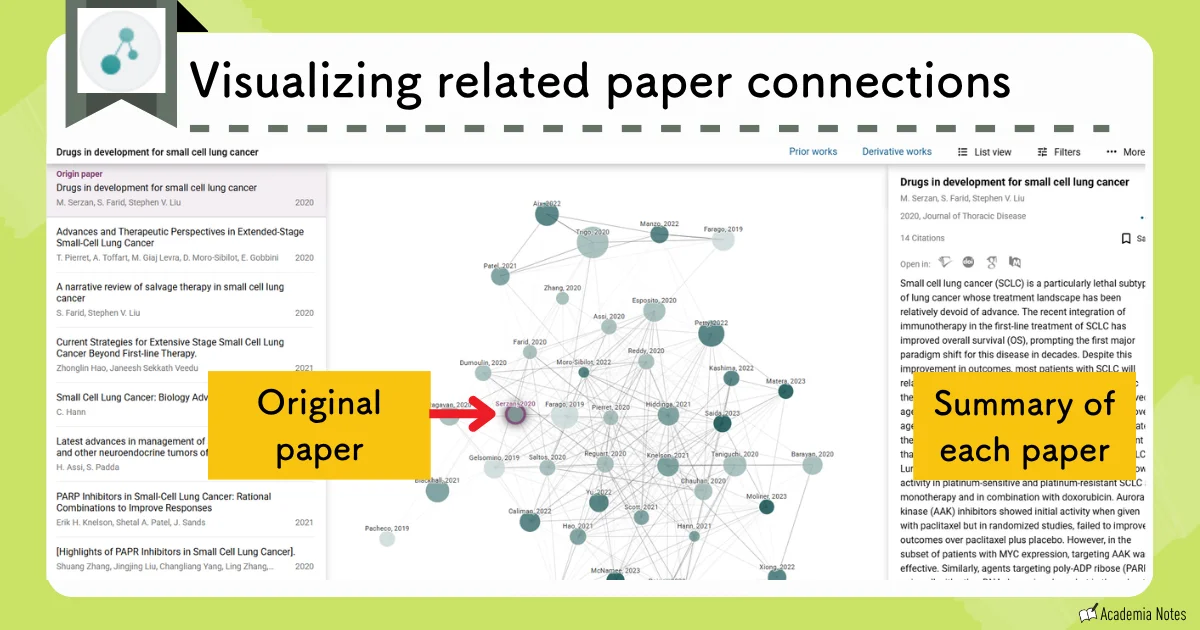
The tool visualizes related papers around your origin paper.
The distance between circles represents the strength of the relationships between papers, while the size of each circle shows how often that paper has been cited:
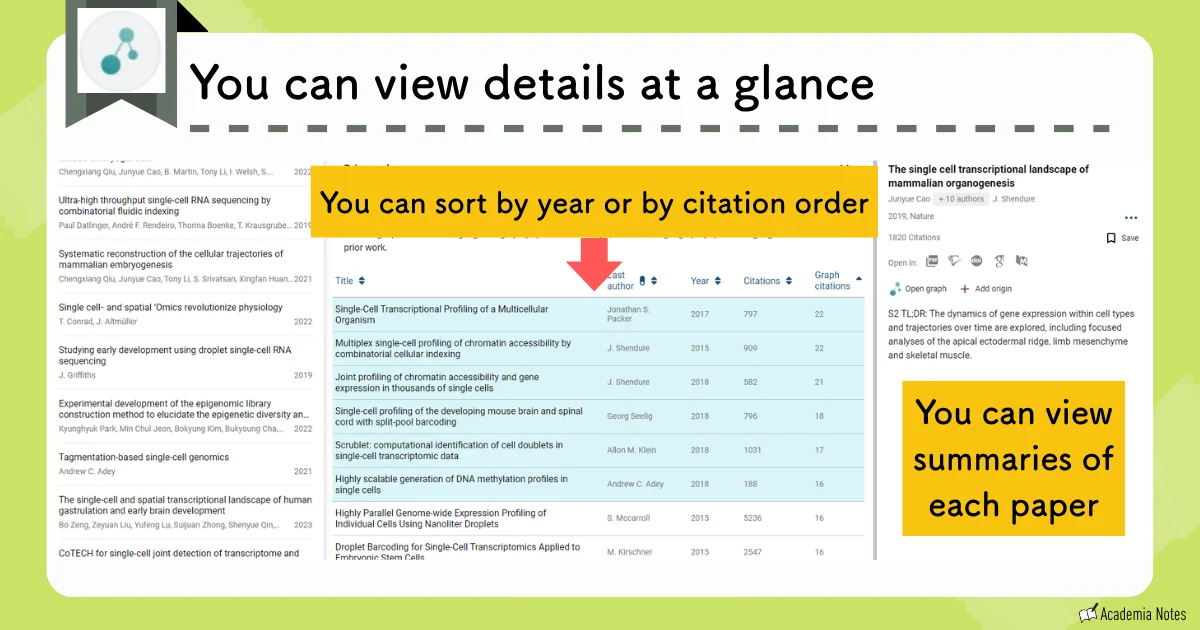
You can also switch to a list view to inspect each paper in detail:
It feels similar to Research Rabbit, but the interface is easier to use.
Connected Papers Pricing Plans
The annual plan works out to roughly US$5–6 per month.
Please note that the price may vary depending on exchange rates.
You can generate up to five graphs per month with the free version, so give it a try.
For more details:
Official Website:Connected Papers (https://www.connectedpapers.com/)
User Guide: Learn more about Connected papers
Research Rabbit is another great option and similar to Connected Papers:
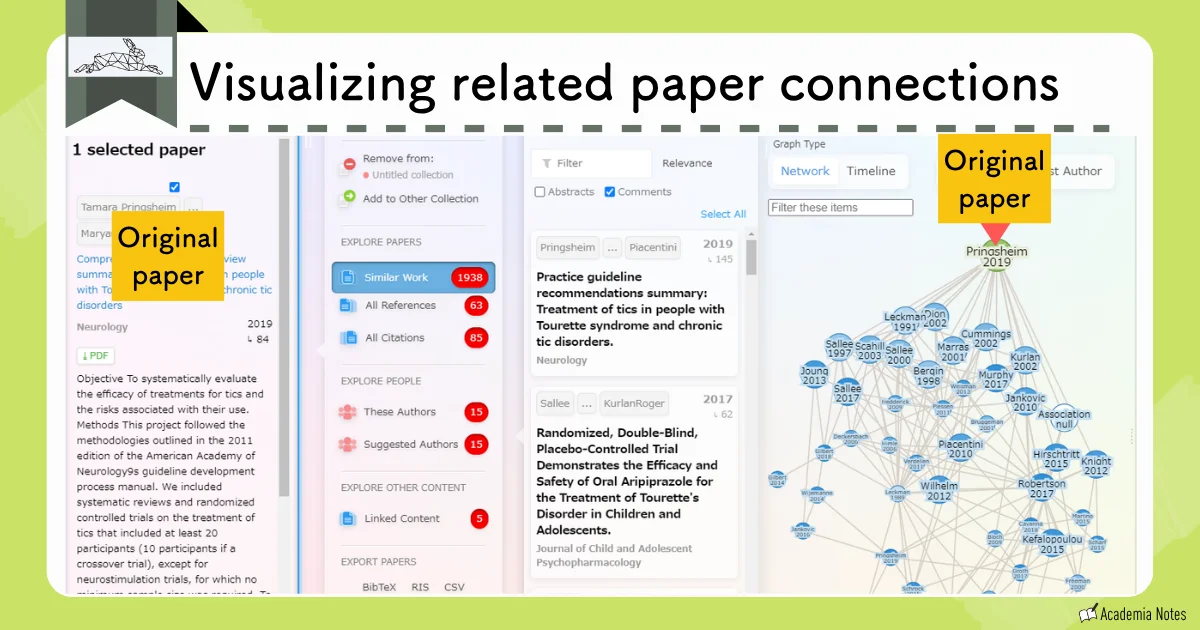
Research Rabbit is currently completely free to use.
For more details
Official Website: Research Rabbit(https://www.researchrabbit.ai/)
Donate: https://opencollective.com/researchrabbit
User Guide: Learn more about Research Rabbit
Paperpal

Here, I’d like to introduce a valuable tool for manuscript preparation.
Paperpal is a proofreading tool provided by Editage, a leading English editing service.
- It offers high-precision proofreading that refines your text into publication-ready language in seconds
- It ensures consistency in style, vocabulary, and logic, resulting in manuscripts that are robust enough for peer review
- You can view the rationale behind corrections and the revision history, which helps improve your academic writing skills
Paperpal uses AI trained on a vast amount of English language editing data from professional editors.
For experienced researchers, it is entirely possible to finalize a manuscript for submission using Paperpal alone.
Instant Academic Proofreading
Let’s try running a manuscript through Paperpal‘s “Pre-submission Check.”
This tool evaluates the text across 7 major categories, covering a total of 30 specific items:
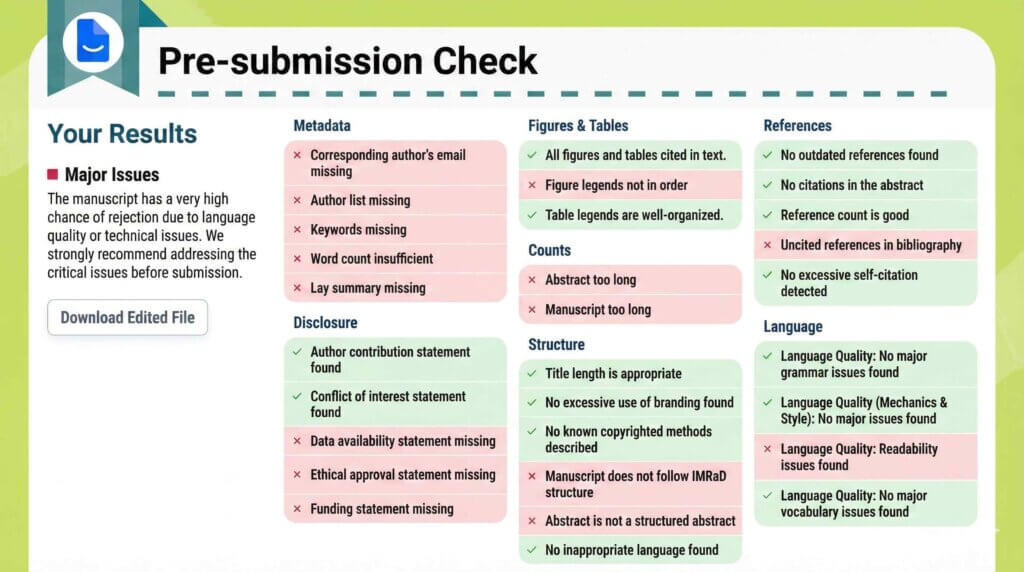
Example of an Actual Report
- Overview of manuscript-specific check items
You will receive comments on the 30 criteria items, which can also be viewed directly in the browser.
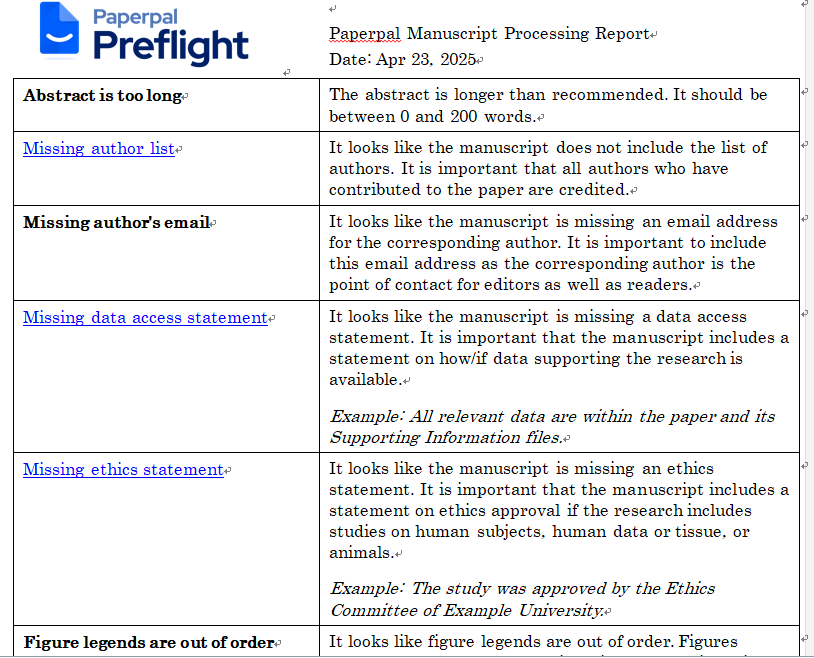
- Revisions with tracked changes and suggestions with comments
The English proofreading function thoroughly checks the entire text for grammar (such as articles and nouns) and word consistency.
I highly appreciate that it leaves a history of changes and provides comments.
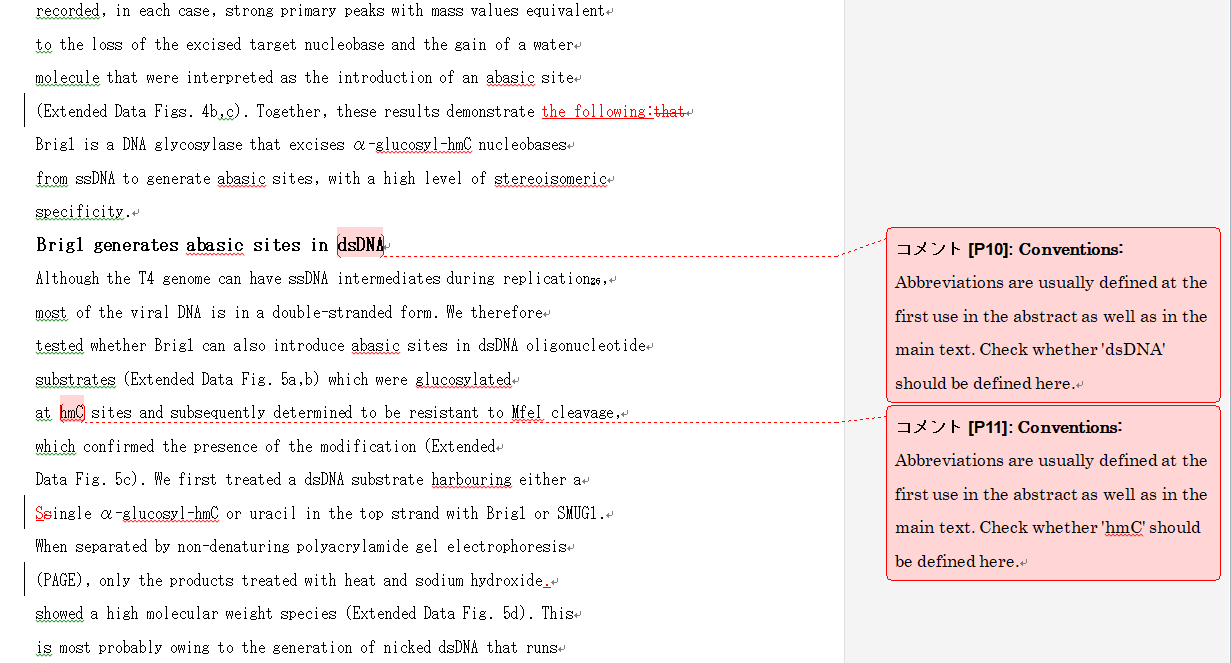
(I will explain the details of the English proofreading later.)
In this way, you can obtain feedback extremely close to that of a professional editor in just a few minutes!
Enhanced Consistency for Publication
- Proofreading
- Consistency Check
Proofreading
It corrects grammatical errors and unnatural expressions.
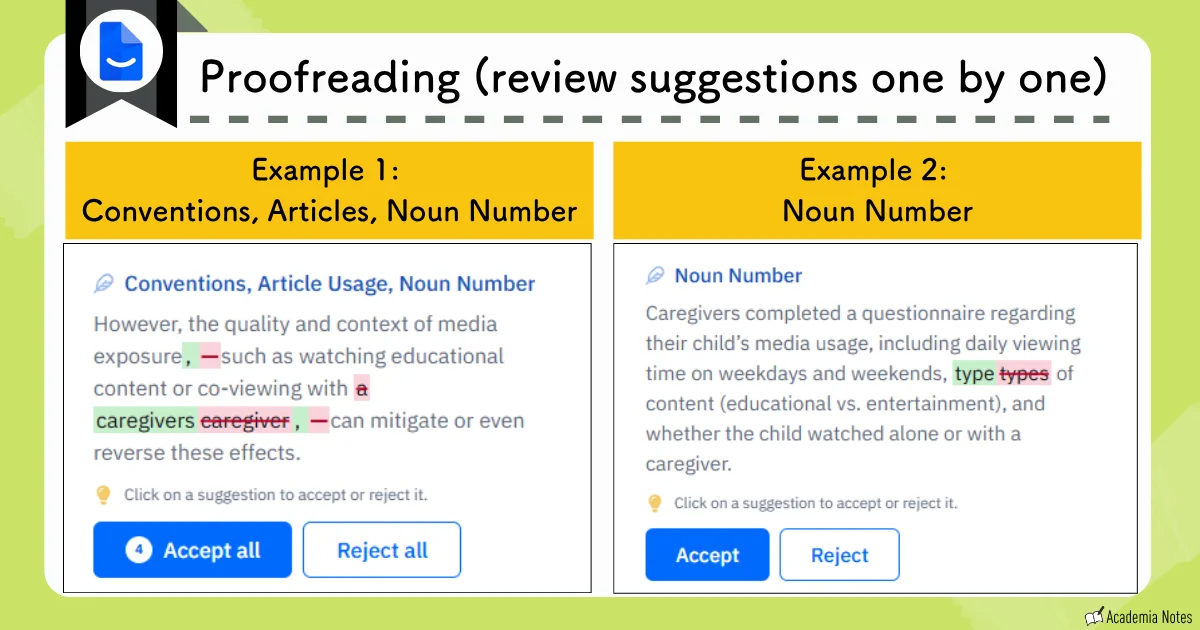
You can choose to either accept or reject each correction!
It’s helpful to be able to review and make revisions one-by-one.
Consistency Check
Paperpal’s AI automatically detects inconsistencies in terminology, verb tense, and tone, and offers suggestions for correction.
This ensures that consistency is maintained throughout the manuscript.
Let’s review and correct these one-by-one as well.
Improve Writing Skills via Feedback
For example, let’s try rewriting drafted text using “Academic Mode.”
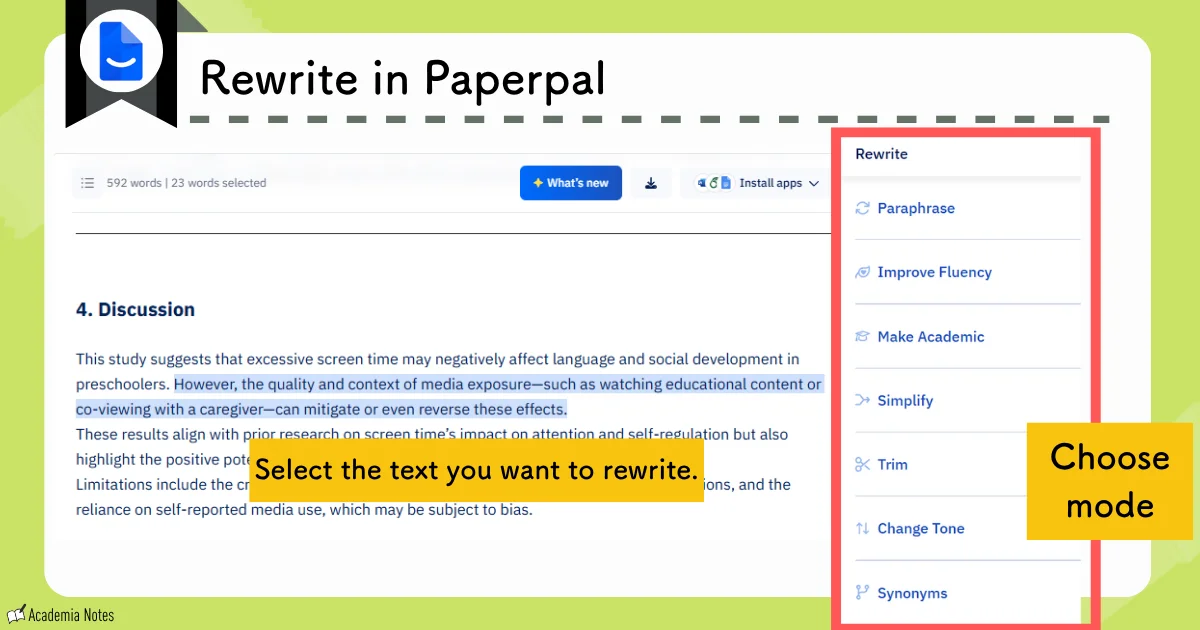
| Paperpal | ChatGPT, etc. |
|---|---|
| You can track the revision history | When tools like ChatGPT rewrite the entire text at once, it becomes difficult to track specific changes. |
You can review suggested revisions one-by-one and decide whether to accept or reject them.
Over time, this feedback helps strengthen your writing skills.
Paperpal Pricing Plans
- Free Plan
- Prime Plan
- starting from US$9.27/month when you use a coupon.
- Apply the coupon code: ACADEMIA20
You can select from three subscription durations: monthly, quarterly, or annual.
The annual subscription is by far the most cost-effective option.
| (Recommended) Annual Plan | Quarterly Plan | Monthly Plan | |
|---|---|---|---|
| Standard Price | $139/year | $55/3 months | $25/month |
| Monthly Equivalent | $11.58/month | $18.33/month | $25/month |
| Discount Code | ACADEMIA20 | ||
| Discounted Price | $9.27/month | $14.67/month | $20/month |
Prices are listed in USD. Prices may vary. Please check the official website for details.
Paperpal Features Comparison by Plan
If you plan to use the service regularly, I recommend subscribing to the Prime Plan.
- Varying usage limits on proofreading and consistency checks
- Varying usage limits on AI features*
- Varying limits on word count for plagiarism checks
- Availability of R Discovery Prime
| Free Plan | Prime Plan | |
|---|---|---|
| Proofreading & Consistency Checks | Up to 200 suggestions/month | Unlimited |
| AI Features* | 5 times/day | Unlimited |
| Citation Generation | Unlimited | Unlimited |
| Plagiarism Check | 7,000 words/month | Up to 10,000 words/month (higher quality) |
| Submission Readiness Check | Limited availability | Unlimited |
| R Discovery | Free features only | Access to Prime features |
*Note: “AI features” refers to Paperpal’s Rewrite, Research and Citation, text generation, and template features.
The monthly limit of 200 suggestions for proofreading is exhausted surprisingly quickly.
The Free Plan is suitable for a trial run.
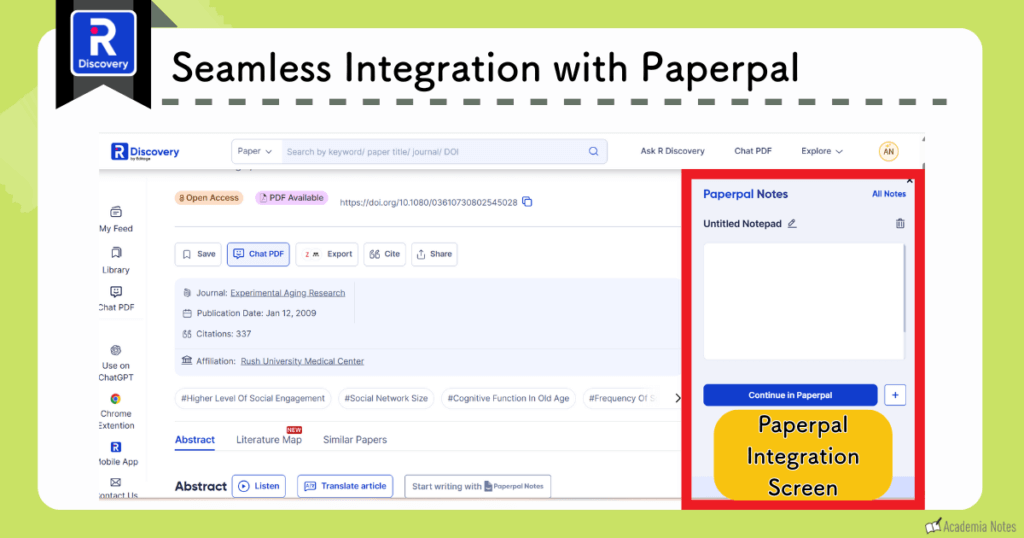
Subscribing to the paid plan automatically grants you access to the features of R Discovery Prime.
R Discovery and Paperpal work very well together, a combination that makes for a highly efficient workflow.
You can proceed with your writing in Paperpal while simultaneously conducting a literature search using R Discovery:
For more details:
Official Website: Paperpal (https://paperpal.com/)
User Guide: Learn more about Paperpal
SciSummary

Specialized Scientific Summaries
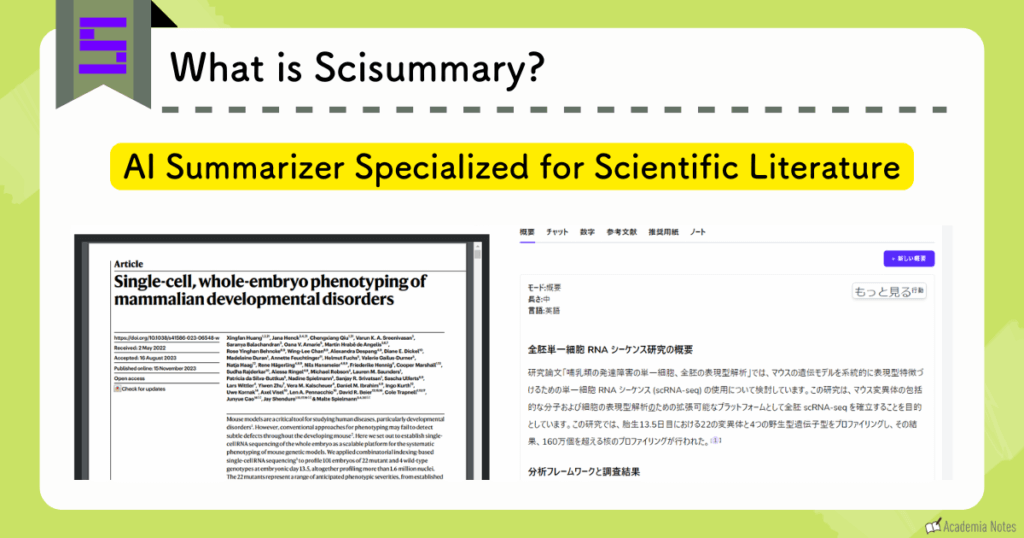
You can customize the level of summarization according to your needs.
- Mode: Summary, Highlight, Key Points, Simplify, etc.
- Length of Summary: Long, Medium, Short
- Language
The resulting content is extremely easy to read.
Seamless Summaries Without Opening a Web Browser
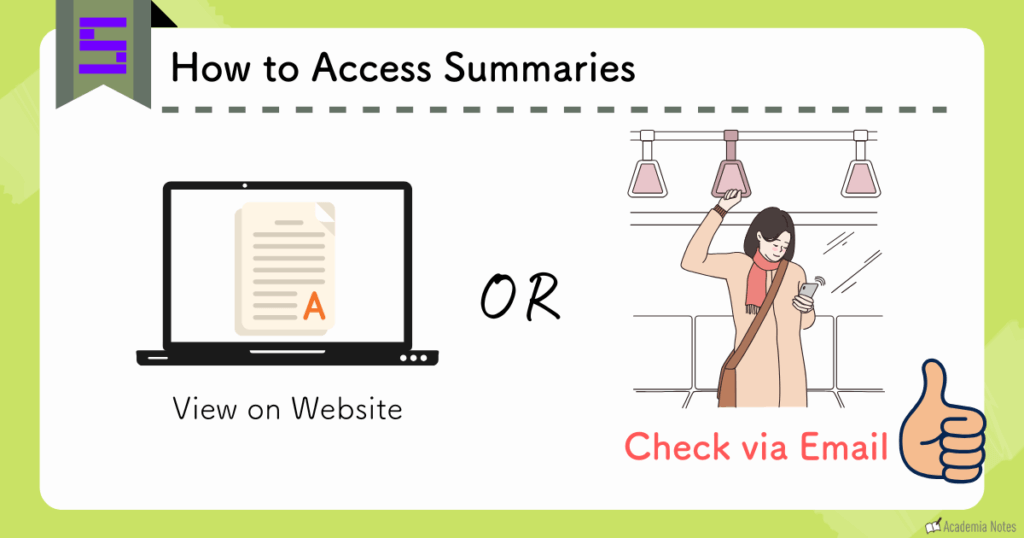
A particularly impressive feature is that requested summaries are automatically sent to your registered email address.
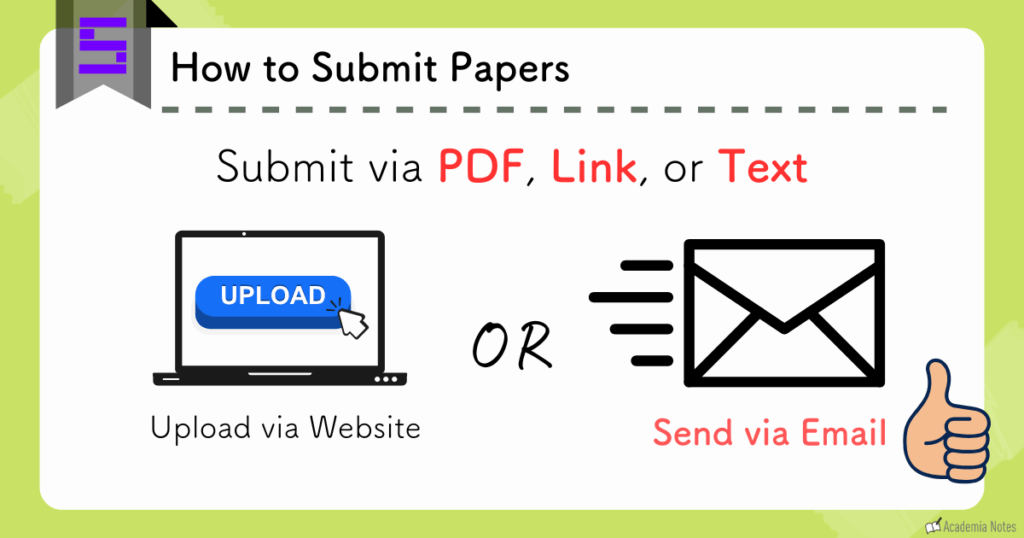
Furthermore, you can simply email PDF files directly to SciSummary:
The interface is highly optimized for mobile viewing.
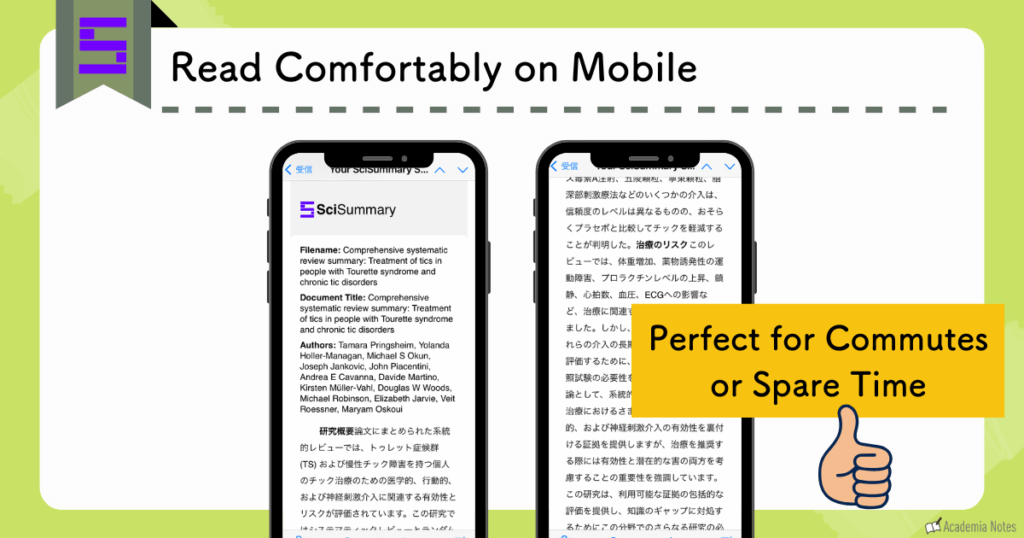
This is incredibly convenient during your commute or in brief spare moments when you prefer not to open a web browser.
Understand Charts & Tables
As a new feature, the tool can now provide explanations for figures and tables.
When you open a paper in the browser and click the “Figure” tab, a list of all the figures within the paper is displayed:
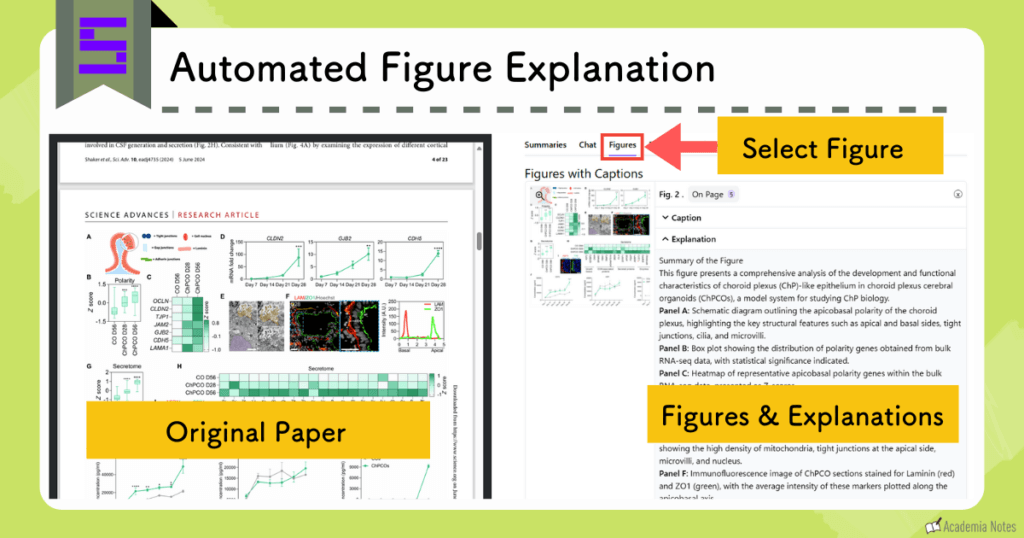
Currently, the explanations for figures are generated in English.
Therefore, I use the DeepL browser extension to translate them for me.
Since this feature has just been released, I look forward to future updates and improvements.
SciSummary Pricing Plans
While this is primarily a paid service, the annual subscription brings the cost to under US$3 per month.
| \Highly Recommended/ Annual Plan | Monthly Plan |
|---|---|
| $2.92/month ($34.99/year) | $6.99/month |
This tool accelerates your reading speed and allows you to effectively utilize spare moments for reviewing literature.
It is highly recommended for time-constrained researchers.
We encourage you to start with the 7-day free trial.
For further details, please refer to the links below:
Official Website: SciSummary(https://scisummary.com/)
User Guide: Learn more about Scisummary
\ Click to jump to the tool that interests you /
Capabilities of AI Paper Search
I have introduced a variety of tools; now, let’s summarize the key benefits of utilizing them.
Semantic Search & Intent Matching
A common limitation of conventional literature databases is that search results often vary significantly based solely on keyword selection, even for synonymous terms.
AI-powered tools recognize these synonyms and retrieve relevant literature that aligns with your specific research intent.
This eliminates the need to manually conduct multiple searches using different keyword variations.
Citation-Backed Answers to Queries
The AI automatically synthesizes answers to your research questions by citing key publications.
Automated Summaries of Search Results
You can instantly determine relevance without the need to read through every abstract.

Researchers often encounter the frustration of examining the full text only to realize it doesn’t align with their objectives, necessitating a new search.
Aggregate Research Findings
This is a unique feature of the AI tool Consensus.
For binary yes or no research questions, Consensus calculates the percentage of top-ranking papers that support each position.
This allows you to visualize the general scientific consensus and identify the prevailing opinion at a glance.
Multi-Paper Extraction & Comparison
This function is invaluable when you need to conduct a comprehensive comparative analysis of related literature.
I recall manually creating these comparison matrices in Excel in the past.
Visualize Related Research
You can identify relevant literature and verify that your bibliography is comprehensive during manuscript preparation.

Gone are the days of manually tracing citations to find related studies in reference lists.
Benefits of AI-Assisted Reading
Instant Content Summarization
AI tools can instantly generate summaries in clear, accessible language.
Resolution of Doubts via Chat
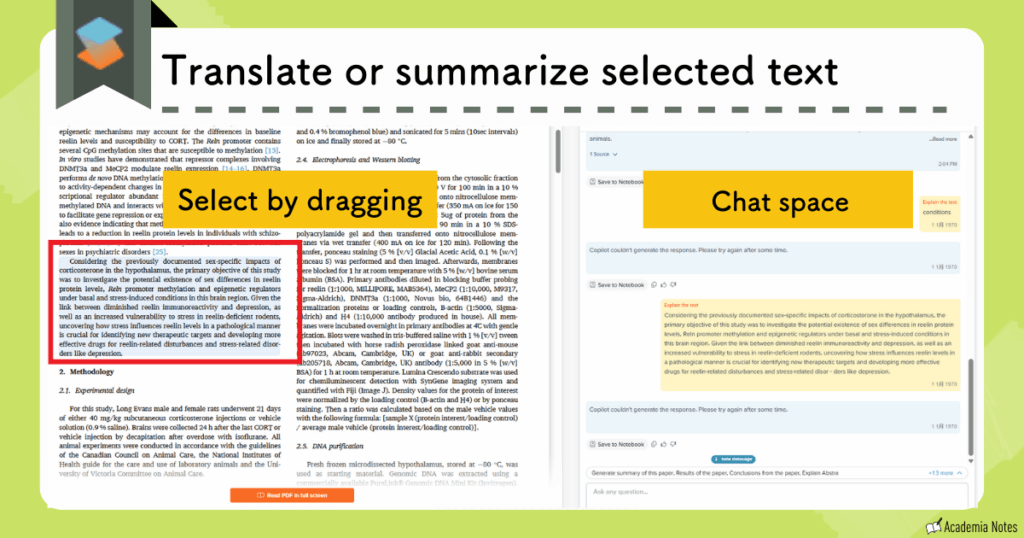
AI chat features address a wide range of inquiries, including clarifications about unfamiliar terminology, methodologies, and discussion points.
This marks the end of the era where you had to interrupt your reading to look up an unfamiliar term.
Explanation of Math & Visuals
Simply highlight specific equations or figures, and the AI will provide a detailed interpretation in the chat panel.
Summary of Featured Tools
Click to jump to the tool that interests you.
Let’s enhance our research efficiency by making effective use of these cutting-edge tools.